
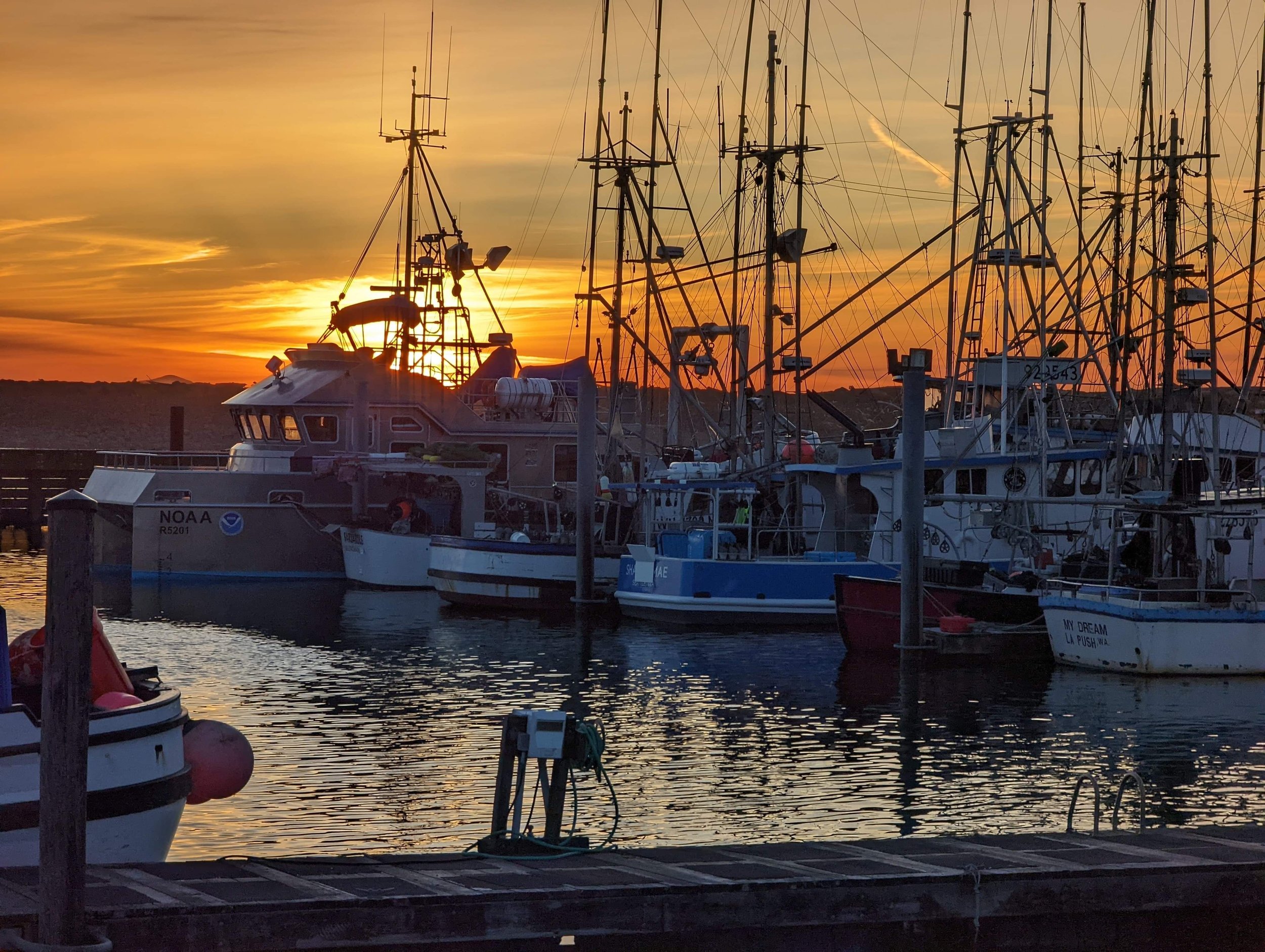
WELCOME ABOARD
You are holding something we created in very limited numbers.
The Sharon Mae Private Reserve begins aboard our commercial fishing vessel, the Sharon Mae, in the Pacific waters off Washington's Olympic Coast. Each King Salmon selected for this reserve was caught by hook and line, one fish at a time, then carefully handled and chilled aboard our vessel.
From an entire fishing season, we set aside only a small number of remarkable Kings — chosen for their exceptional richness, natural marbling, and the quality we believed worthy of bearing the Sharon Mae name.
Only 250 individually numbered tins make up this Private Reserve.
We invite you to step aboard and follow the journey from the Pacific Ocean to your table.
TK & Sharon Kelly
F/V Sharon Mae
Kelly's Fresh Fish
La Push
A Fishing Place
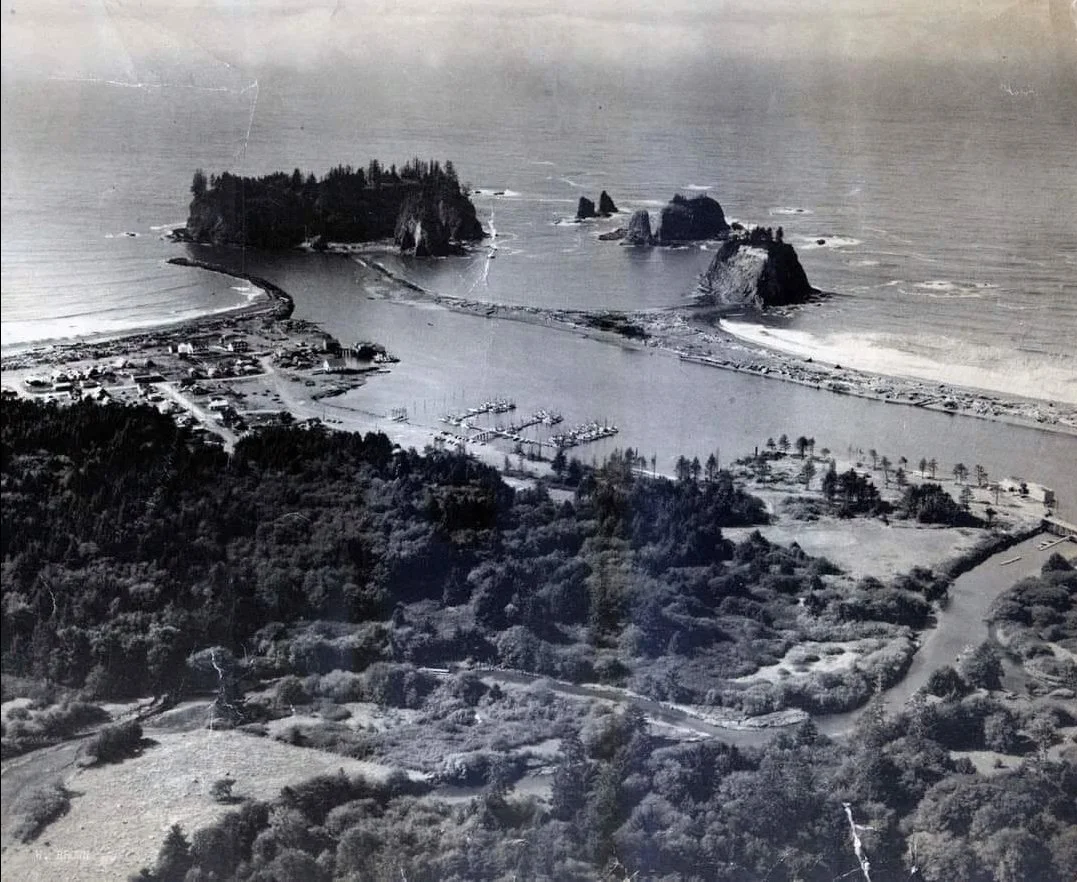
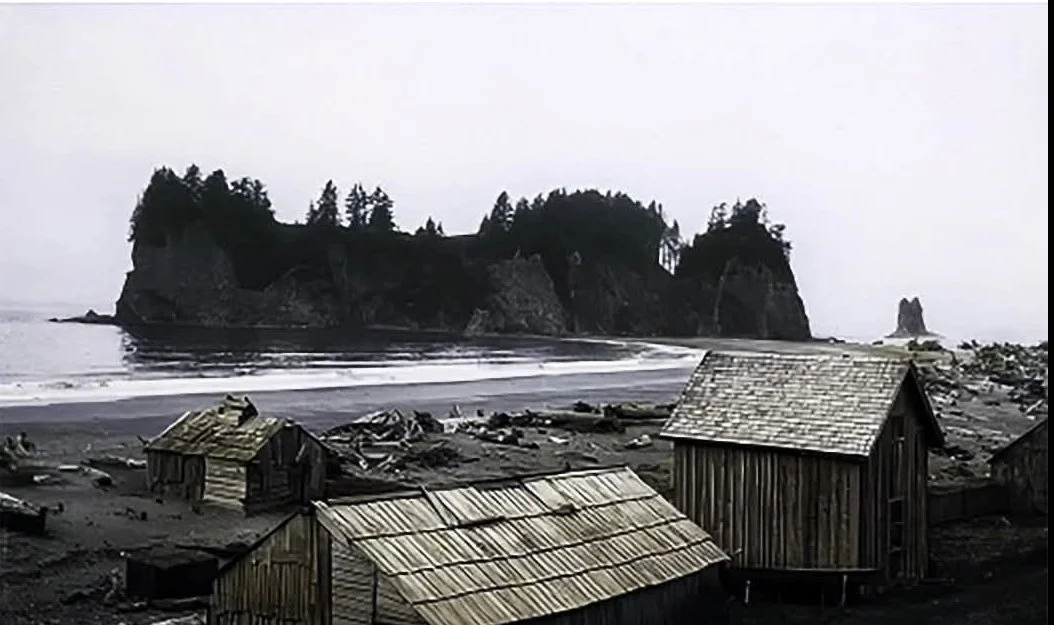
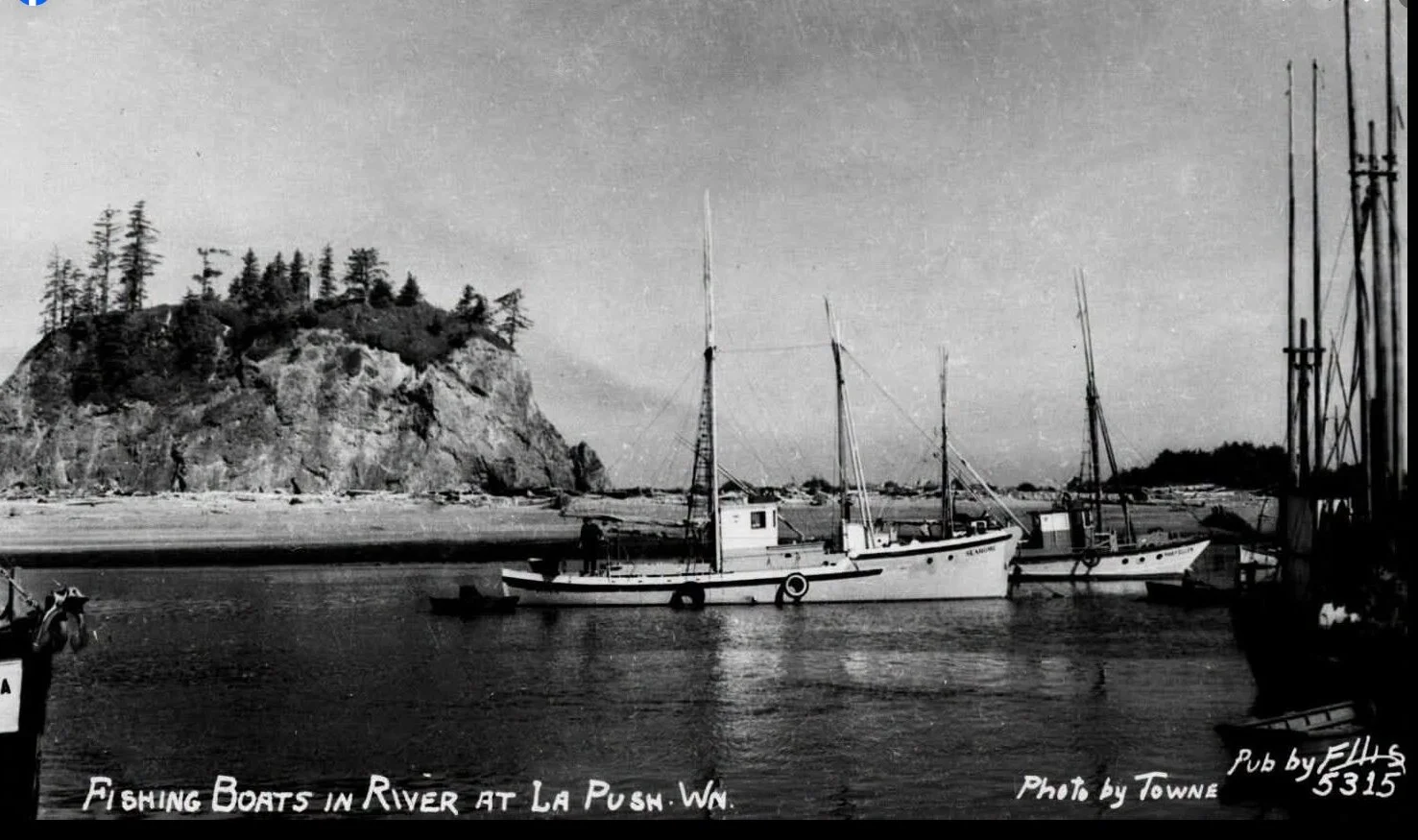
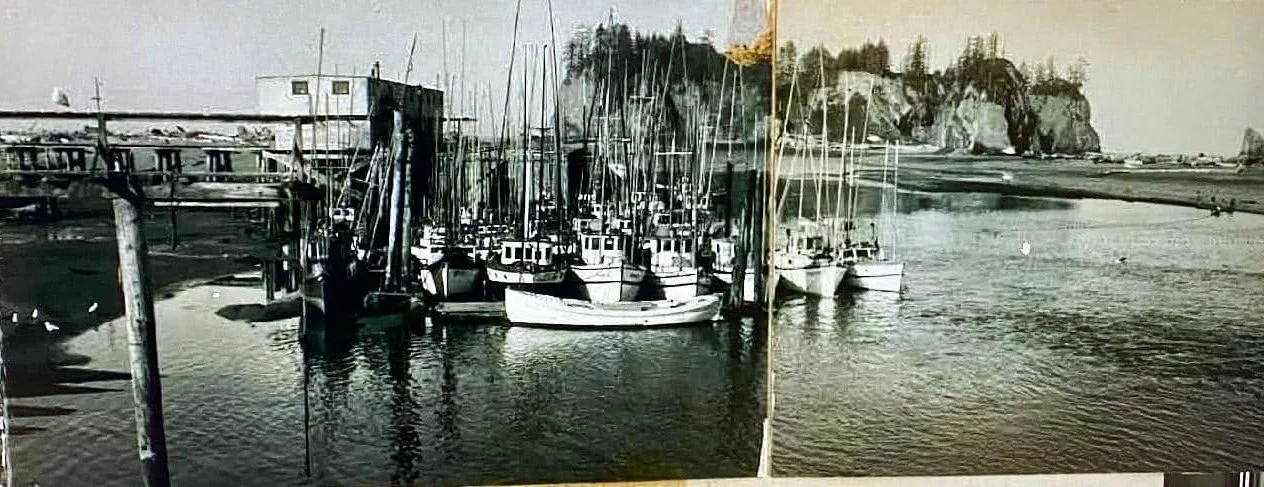
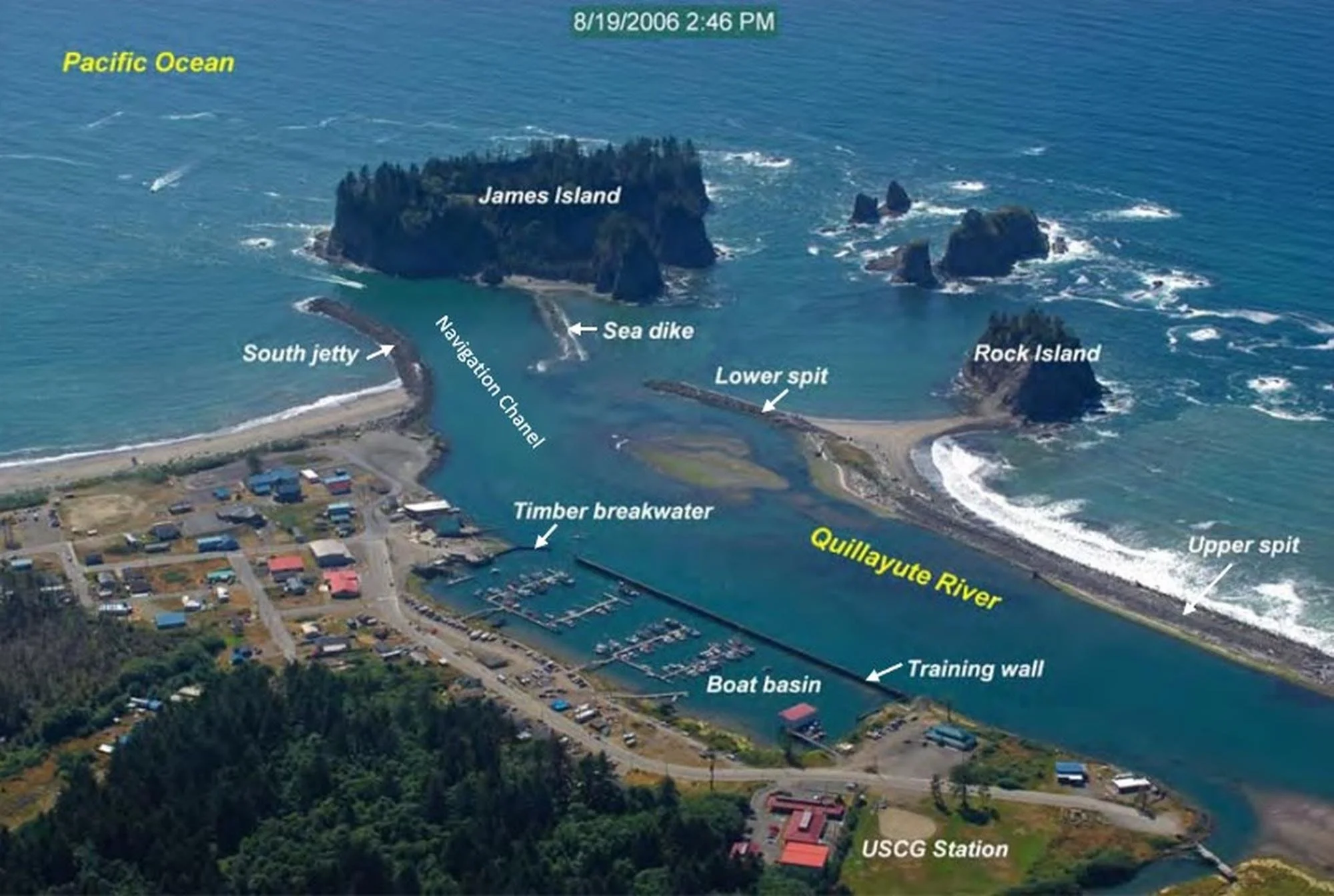
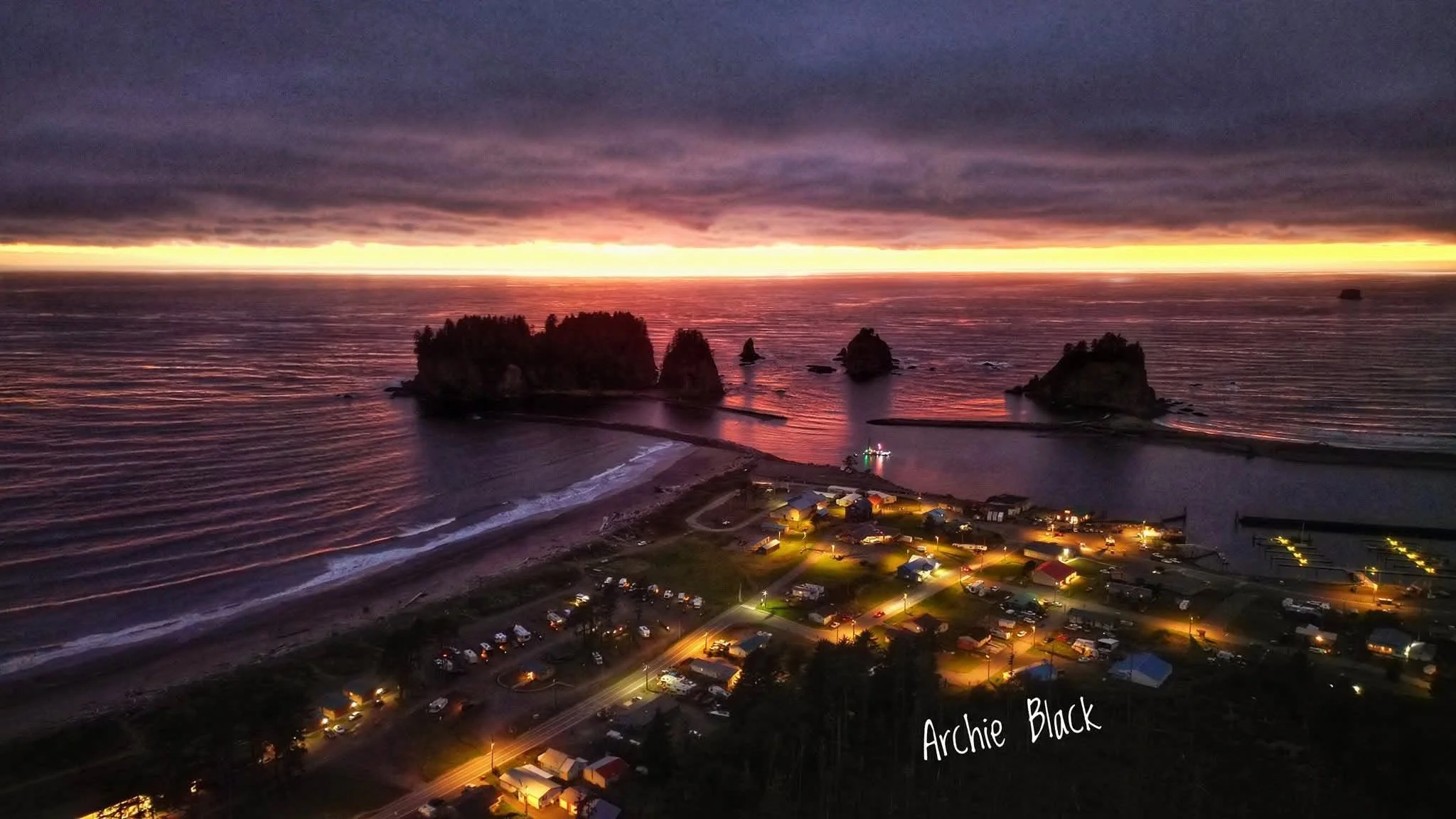
Our journey begins at La Push, Washington, where the Quillayute River meets the Pacific.
The Quileute people have lived along this coast for thousands of years, with the ocean and its marine resources central to life here. In more recent generations, La Push also became home to a working commercial fishing fleet, with fishermen crossing the river bar in pursuit of salmon and other Pacific fisheries.
The boats have changed and the harbor has changed, but La Push remains closely connected to the ocean beyond its shores.
Each season, the Sharon Mae returns to this harbor before crossing the Quillayute River bar for the fishing grounds off Washington's Olympic Coast.
The Origin of our Private Reserve.
STEP ABOARD THE SHARON MAE
Come fishing with us
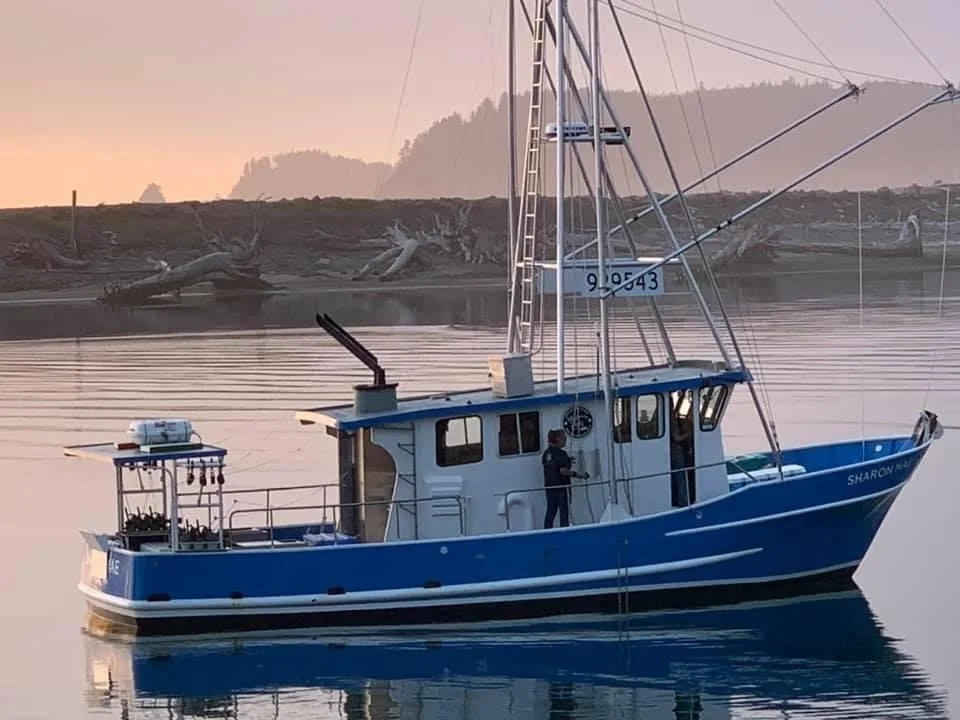
The Sharon Mae is a 42’ steel commercial fishing vessel
The F/V Sharon Mae is the heart of Kelly's Fresh Fish!
From La Push, we fish the Pacific waters off Washington's Olympic Coast, harvesting wild King Salmon by hook and line, one fish at a time.
Every salmon selected for the Private Reserve begins its journey here.
Before we continue, open the parchment chart included in your Private Reserve box and take out your Sharon Mae coin.
Turn the coin to the side bearing the Sharon Mae. Along the bottom you'll find a set of coordinates —
47°54'15"N 124°38'40"W.
Find that position on your chart.
That's where your fishing trip begins.
JAMES ISLAND — A-KA-LAT
More than Just an Island
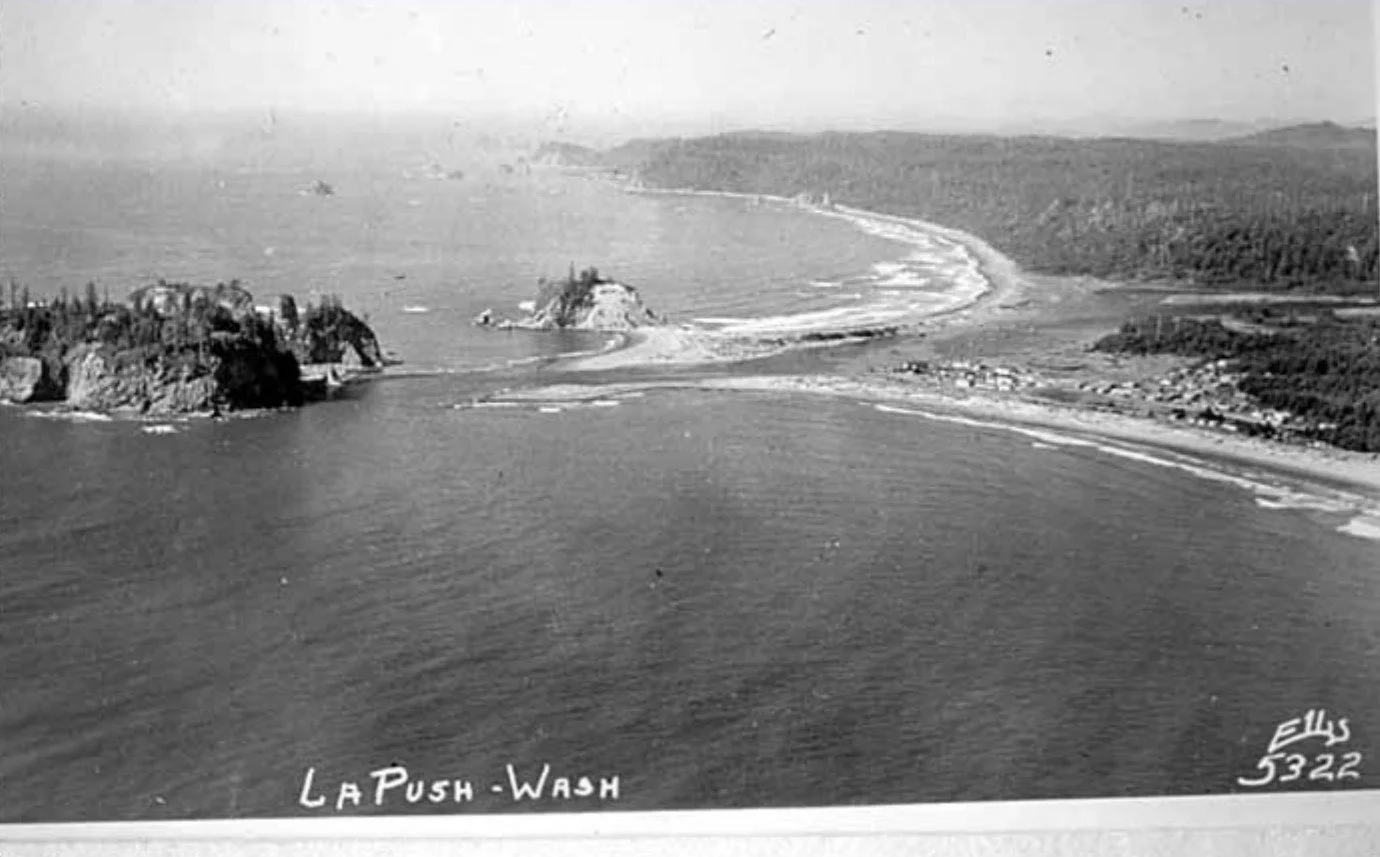
The iconic James Island and the mouth of the Quileute River
Rising above the mouth of the Quillayute River, James Island—known to the Quileute people as A-Ka-Lat, “Top of the Rock”—has watched over these waters for generations. A place of profound cultural significance to the Quileute people, it has served through history as a village, lookout, refuge and sacred place.
Today, every trip aboard the Sharon Mae begins and ends beneath its unmistakable silhouette. As we leave La Push and cross the river bar for the Pacific, James Island is our last landmark behind us—and one of the first to welcome us home.
LET’S DEPART
Our Trip Begins
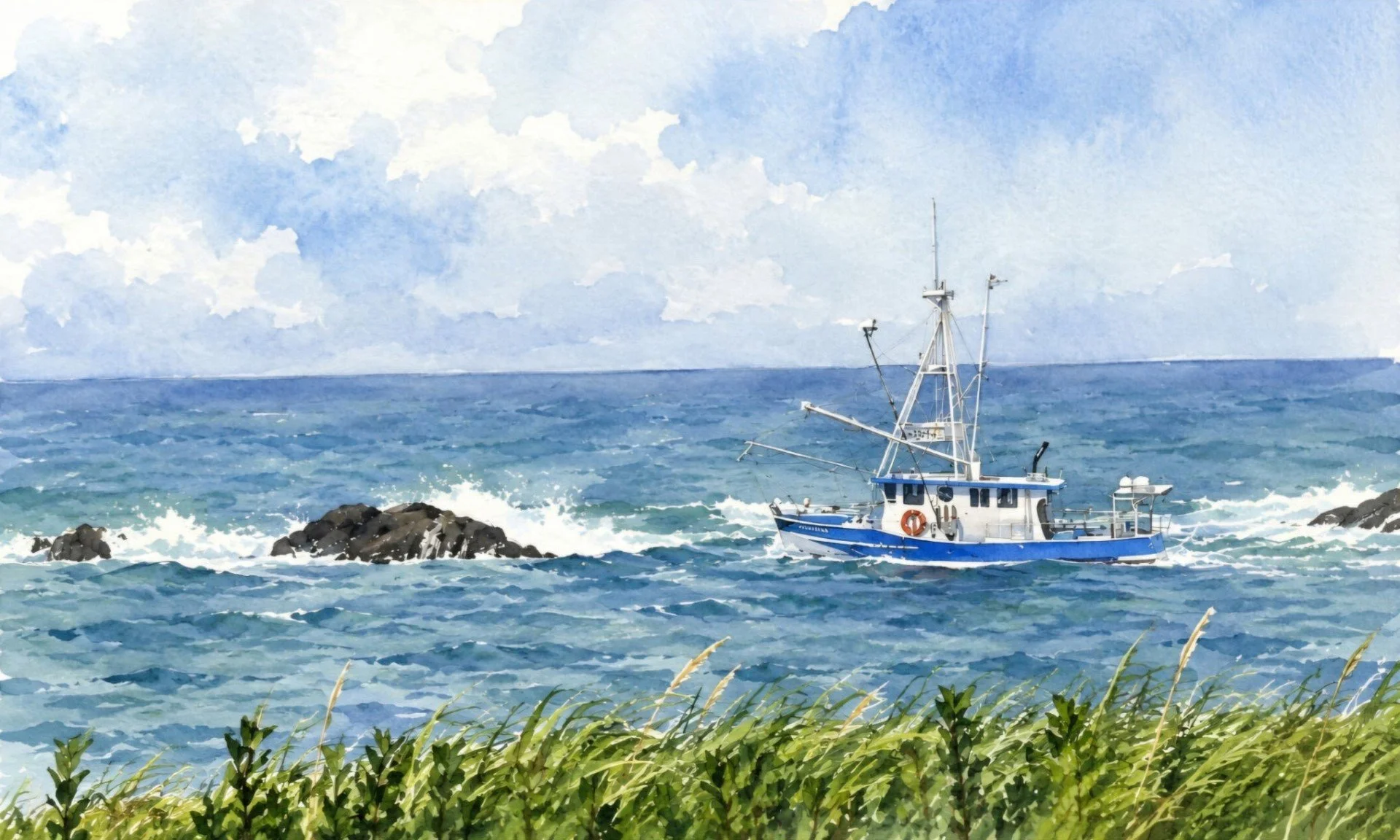
The Sharon Mae departs the Quileute River
The chart in your hands isn't simply a map of Washington's Olympic Coast. We've marked it with the names we use aboard the Sharon Mae — the fishing grounds, landmarks and places that have become part of our lives on the Pacific.
Now, with the chart open and your coin in hand, come fishing with us.
We'll leave the Port of La Push, cross the Quillayute River bar and head offshore. Along the way, we'll show you where we fish, how we find King Salmon, how each fish is caught and cared for aboard the Sharon Mae, and why only a few from an entire season are chosen for the Private Reserve.
INTO THE PACIFIC
A Unique Wilderness
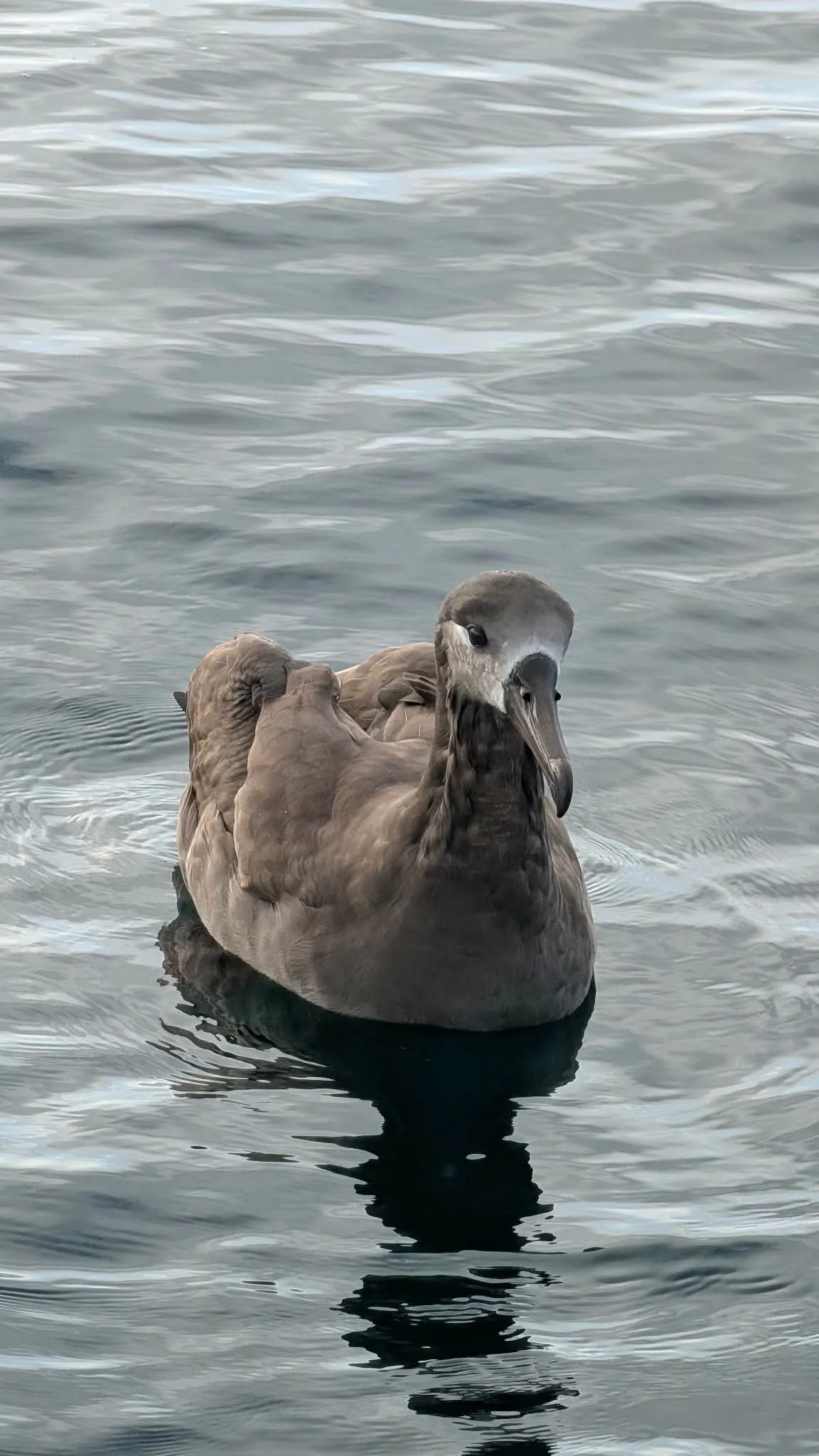
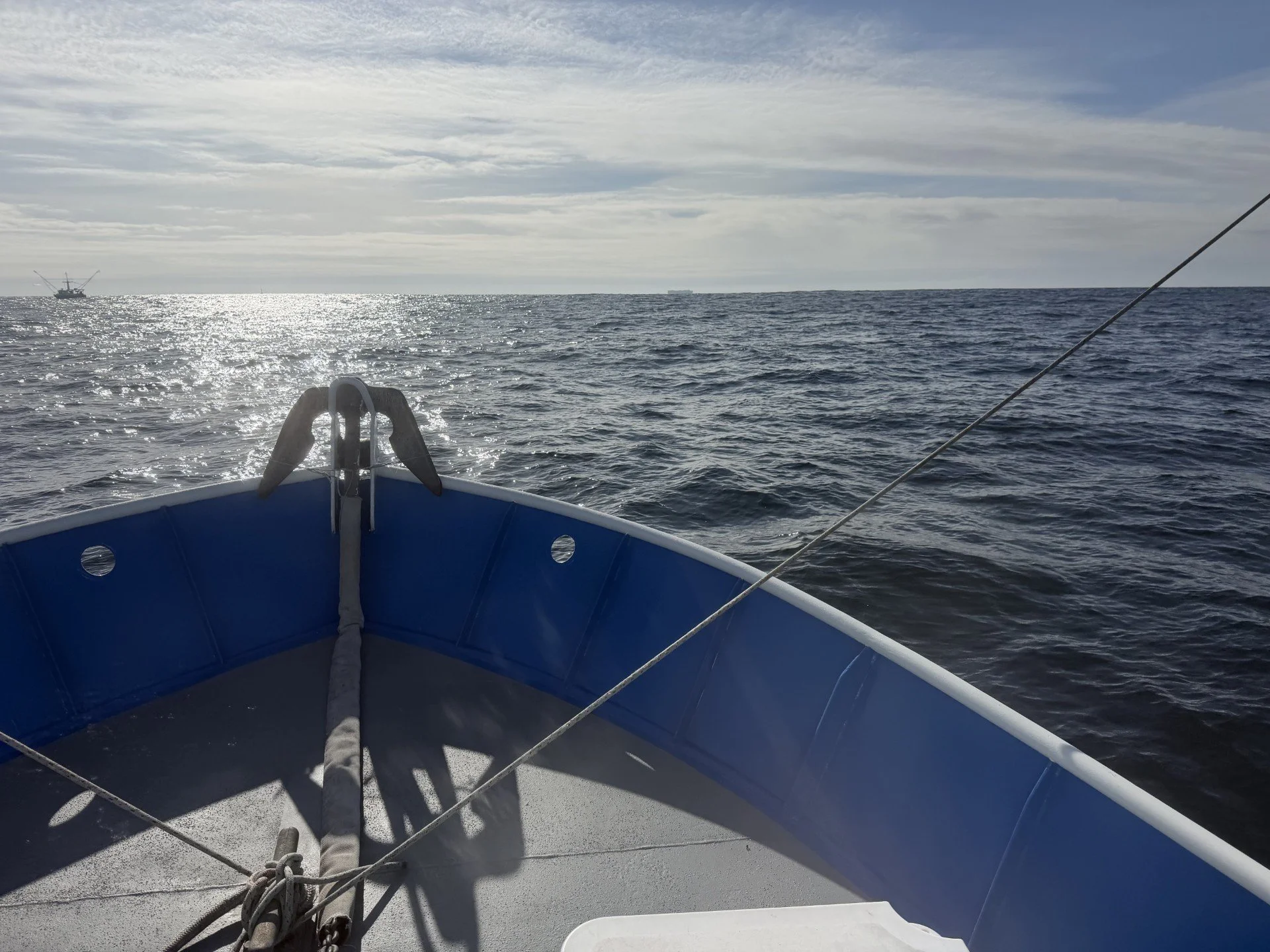
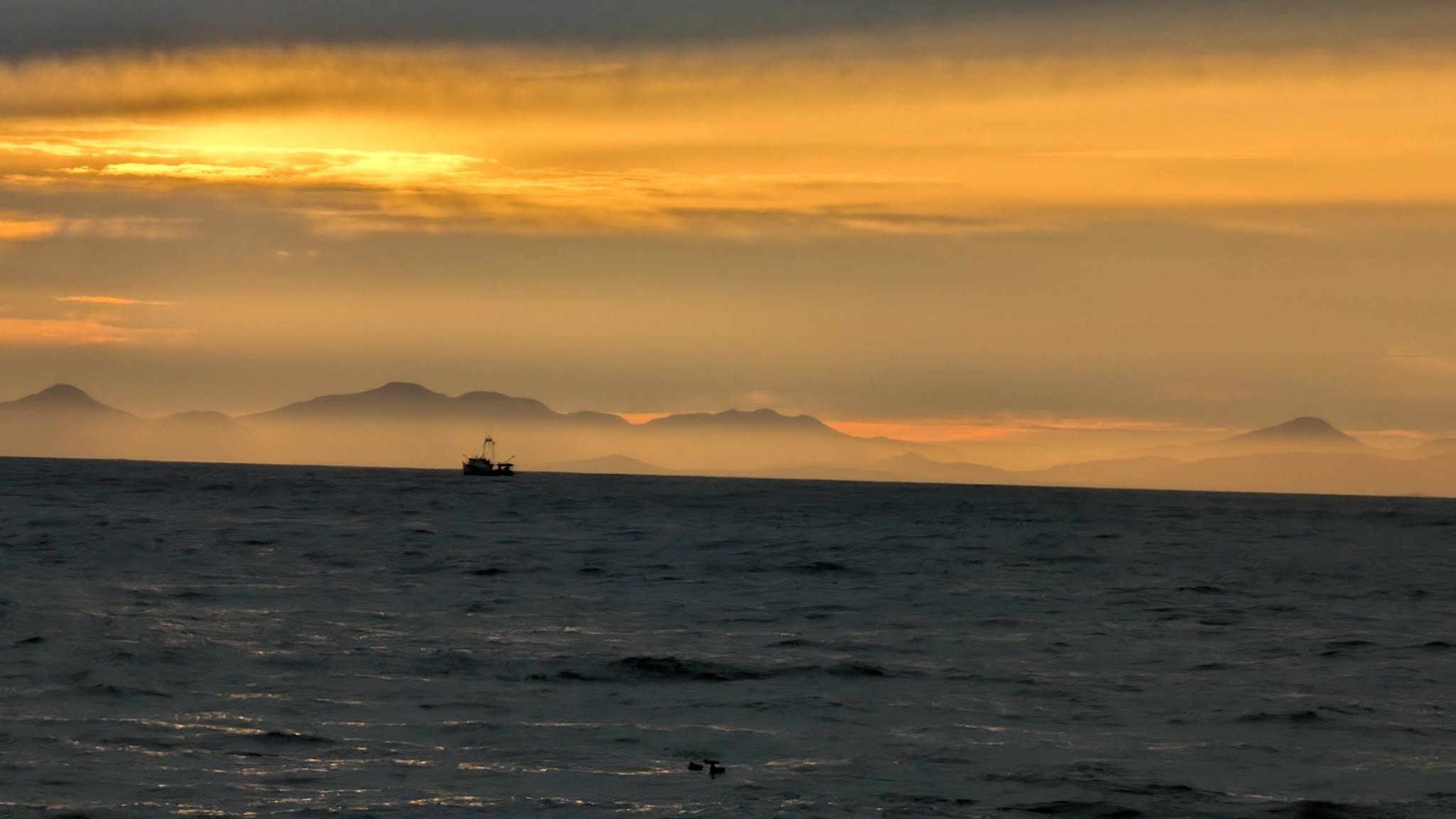
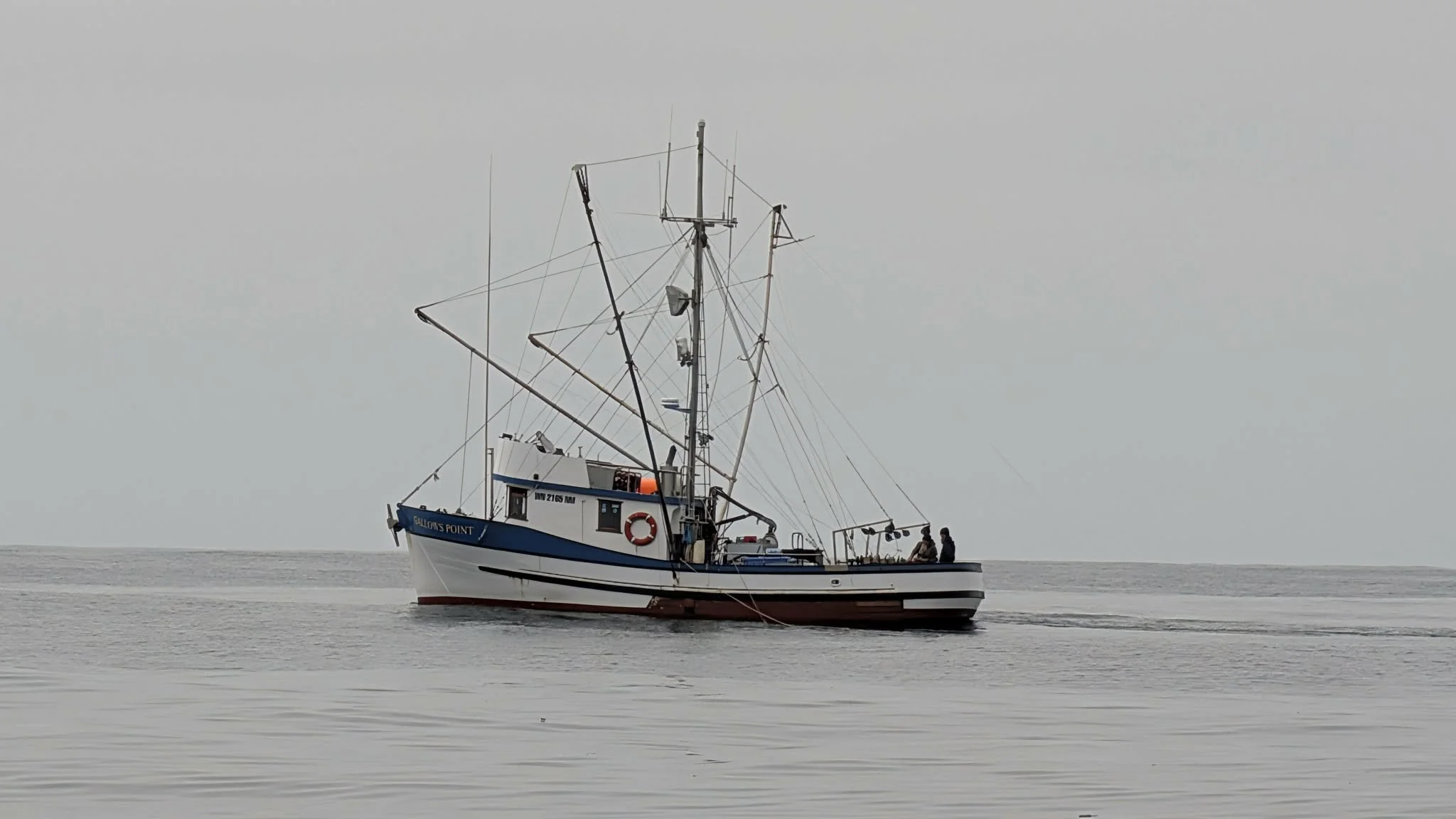
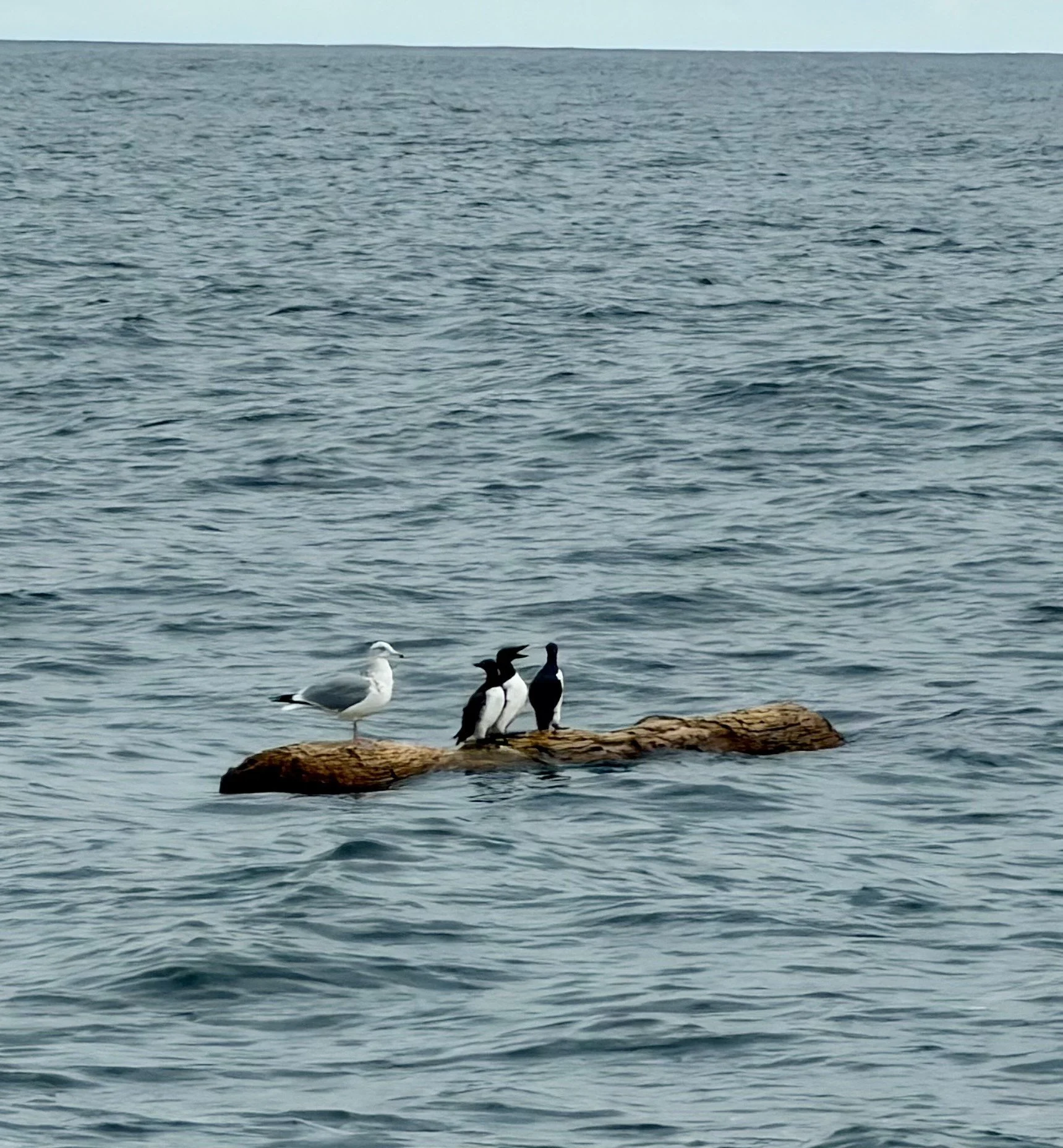
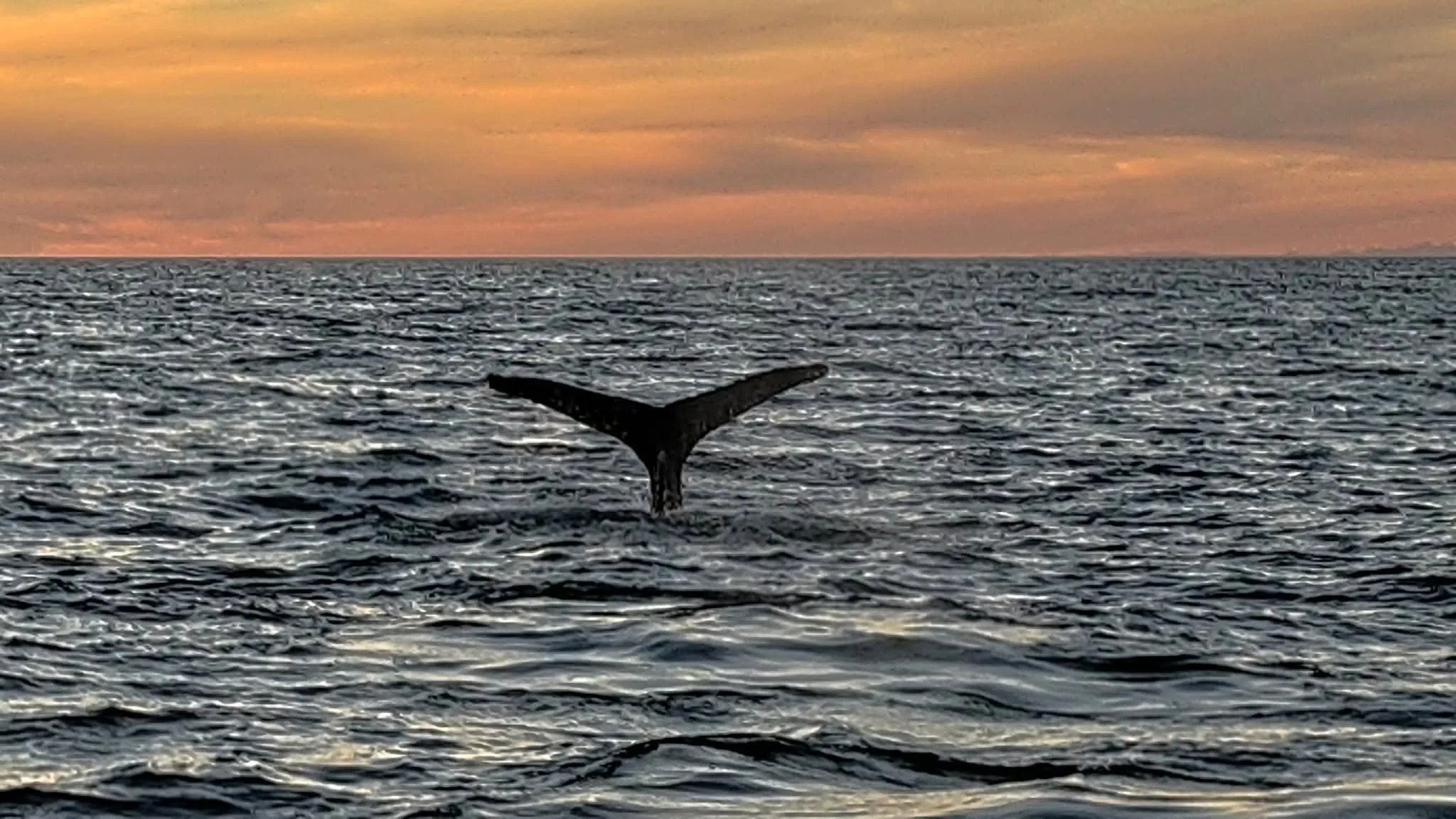
Once clear of the Quillayute River bar, we turn west and northwest toward the open Pacific.
The prevailing westerly swell meets the Sharon Mae on her starboard side as we make our way offshore. When we've put enough distance between ourselves and James Island, we can safely turn the vessel and point her toward the fishing grounds we've chosen for the day.
Now we're in the Pacific Ocean wilderness.
Out here, we never know exactly what we'll encounter. Whales may surface alongside us. Orcas, dolphins and porpoises travel these waters. Albatross and other seabirds appear miles from land. Sometimes the ocean is remarkably calm. Other days, the wind and swell remind us very quickly where we are.
And somewhere ahead of us are the King Salmon we've come to find.
So how do we find them in an ocean this big?
THE HUNT FOR KING SALMON
How we find the fish
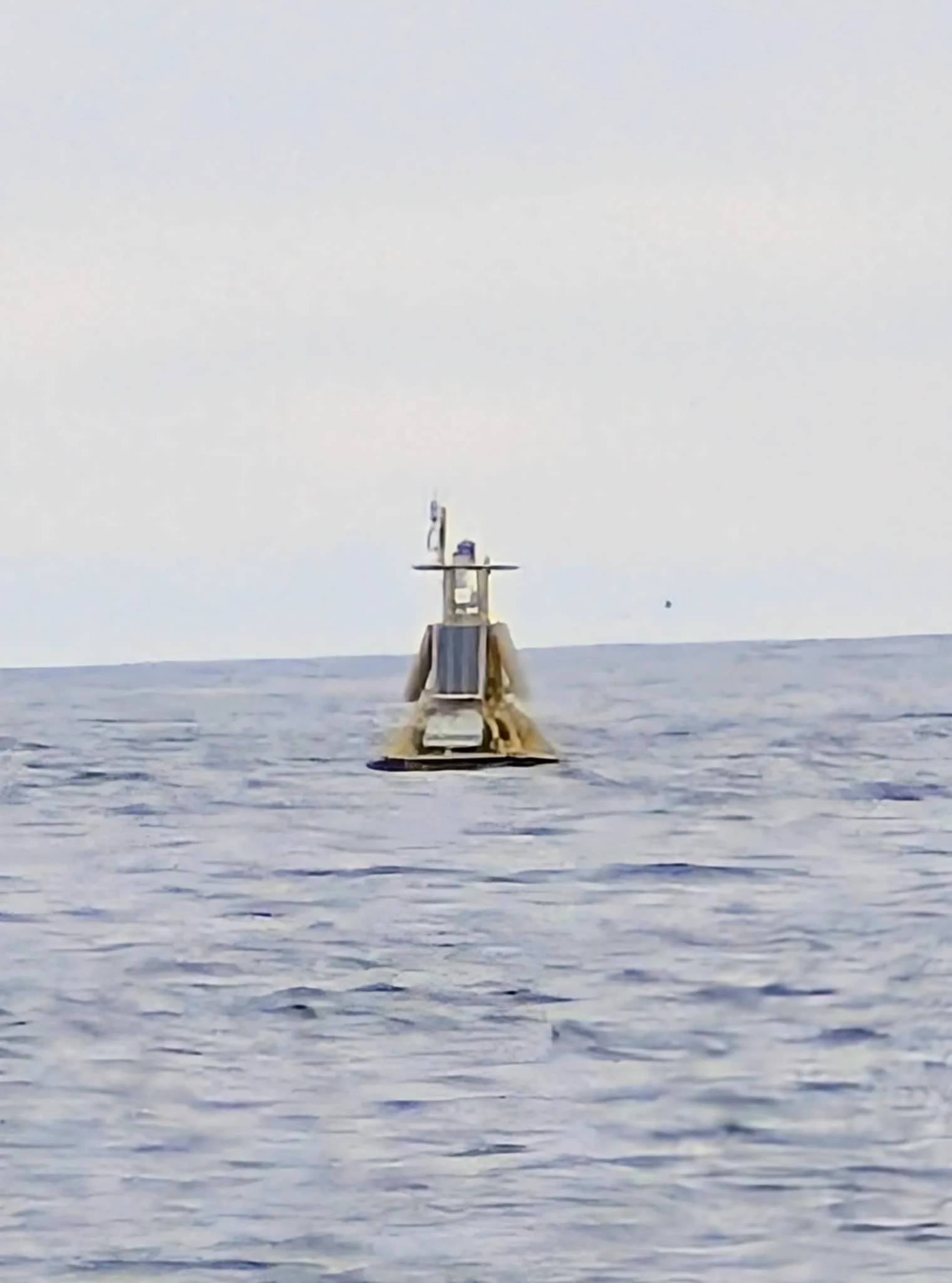
The University of Washington Weather Buoy sits offshore about ten nautical miles from La Push
Now move your coin west/northwest across the chart, passing over two of our familiar fishing spots — The Rock Pile and The Weather Buoy.
We're leaving La Push and the coast farther behind us now.
Out here, there are no signs pointing the way to King Salmon. The Pacific is enormous, and the fish are constantly moving. Finding them means paying attention to what the ocean is telling us.
We watch the water temperature. We look for changes in currents and areas where different bodies of water meet. We watch the birds and the bait. And we pay close attention to what our electronics are showing beneath the Sharon Mae.
But experience matters too.
After years of fishing these waters, certain places become familiar. We learn where Kings have appeared before, where bait tends to gather, and how changing ocean conditions can make a productive fishing ground come alive — or leave it seemingly empty.
The Rock Pile and The Weather Buoy are two of those places.
Some days we stop and fish here.
Other days, the ocean tells us to keep going.
Today, we're going farther offshore.
THE FISHING GROUNDS
The Prairie is one of our favorite fishing spots
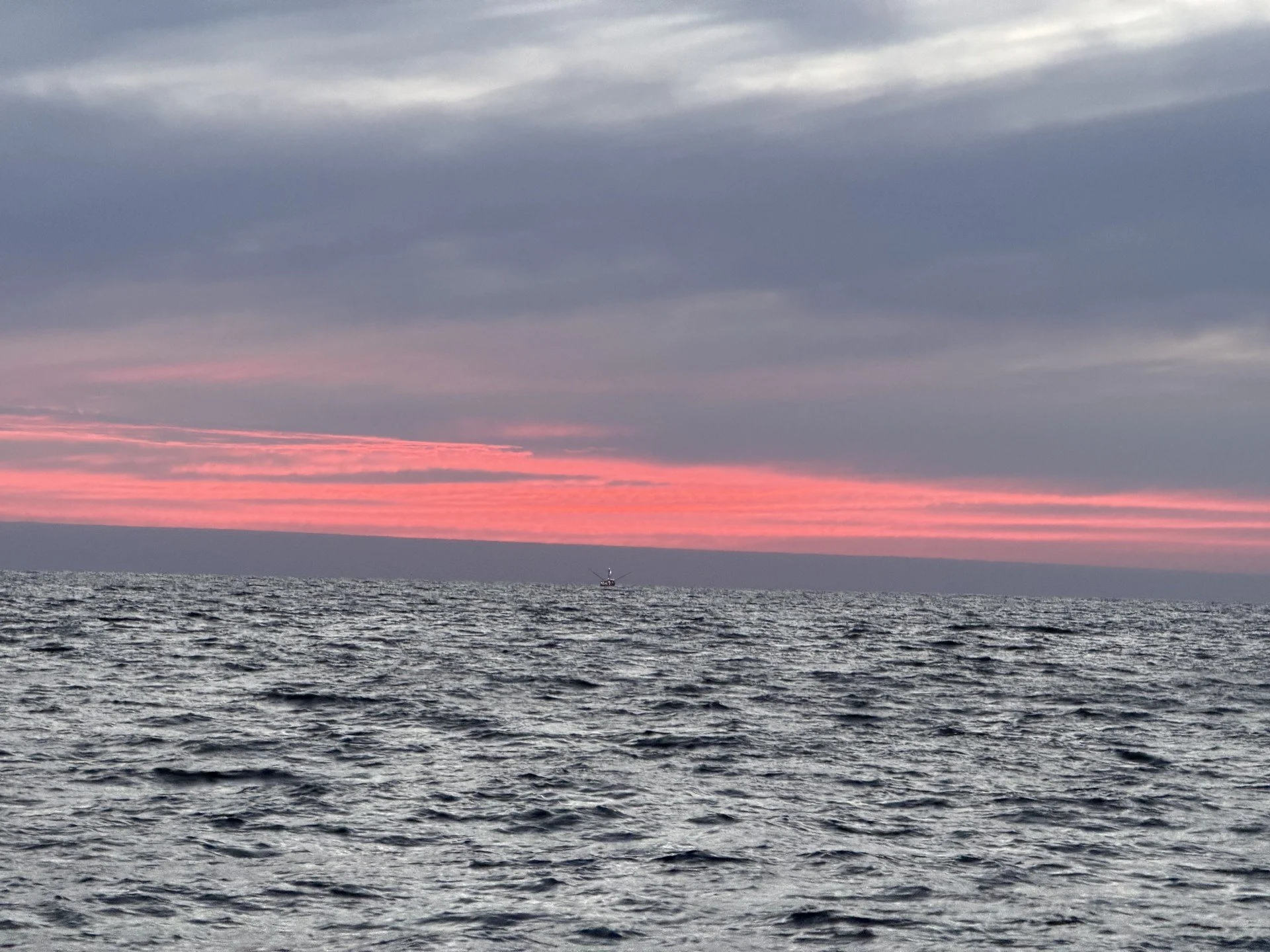
Sunset on The Prairie with a Troller in the distance
Continue to move your coin farther west/northwest across the chart, over the Compass Rose and towards the deep-water chasm of the Juan de Fuca Canyon. Today we are headed to the South End of the Prairie.
This is a very long run from La Push, usually around six hours depending on currents and weather. Often times we leave in the late afternoon, arriving just before dark.
After we cross the Compass Rose but before we reach The Prairie, we have to cross what we call “The Ditch” or better known as the Juan de Fuca canyon.
This deep-water canyon along with three others just a little further west and to the south, cut into the Continental Shelf off Washington’s coast. Together they create one of the most topographically complex—and biologically productive—coastal zones in the country. And The Prairie sits right smack dab in the middle of it, which makes it one of our most productive fishing spots.
Think of The Prairie like its counterpart on land with the same name. A vast, relatively shallow plateau surrounded by deep-water canyons.
From the surface, there is little to distinguish any of this diverse hidden world. The enormous Pacific surrounding us stretches uninterrupted to the horizon. But beneath the Sharon Mae our electronics tell a very different story. As we cross The Ditch, we watch the bottom fall away beneath us until eventually it disappears from our sounder altogether, so deep that our electronics are not sophisticated enough to record it.
As we reach the eastern edge of The Prairie we can observe on our sounder the bottom eventually beginning to rise again as we start our ascent out of the Juan de Fuca canyon and onto the fishing grounds.
Keep moving your coin west/northwest just a bit further where we will be shutting the boat down for the night and try to get some sleep before we begin fishing in the morning.
While we sleep the Pacific keeps moving.
By morning, the Sharon Mae could have drifted miles from where we shut down. We will have to see where our drift took us by reading our electronics and begin searching for the fish.
Now we have to read the ocean.
READING THE OCEAN
Finding King Salmon in the Pacific
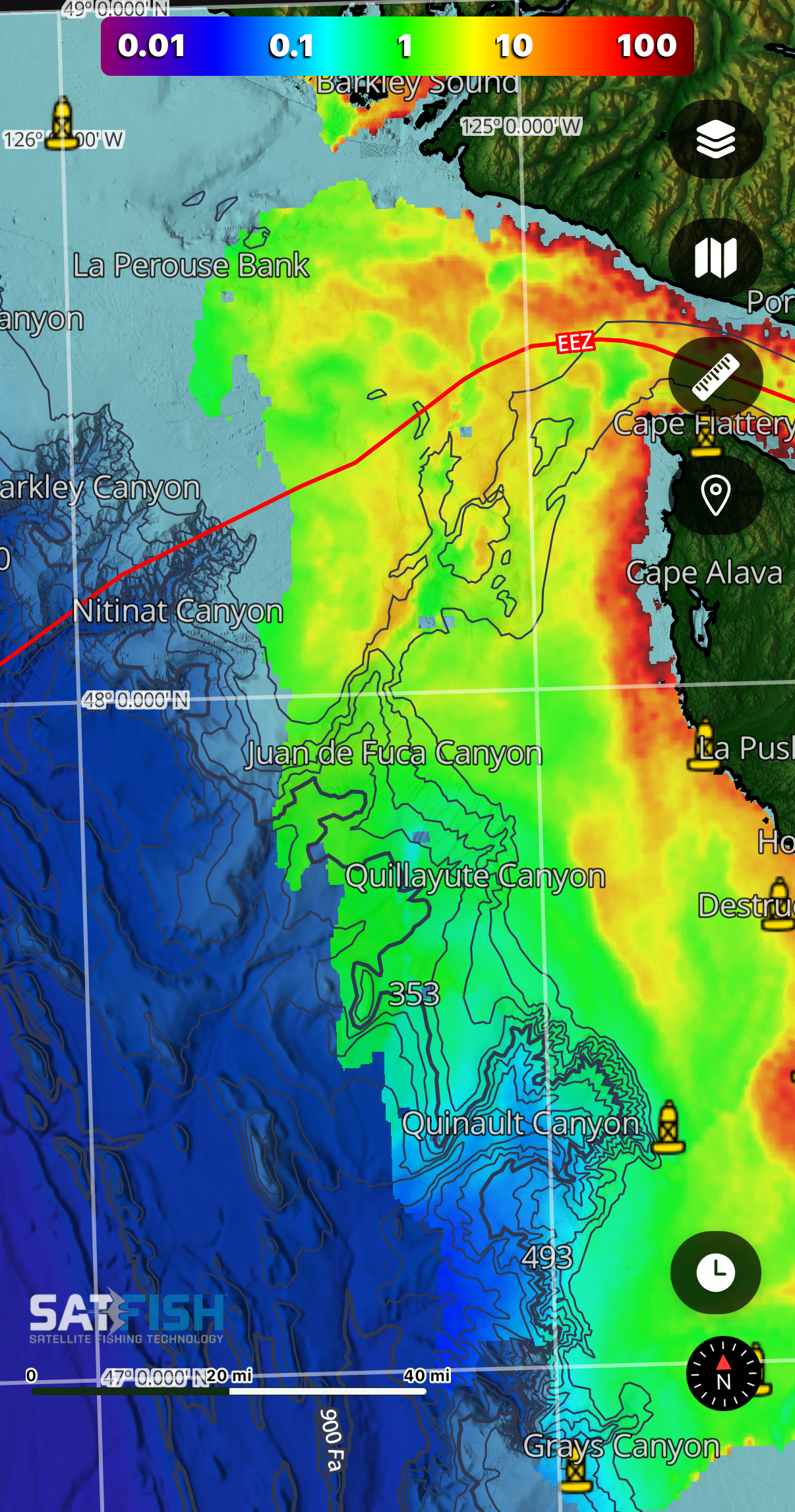
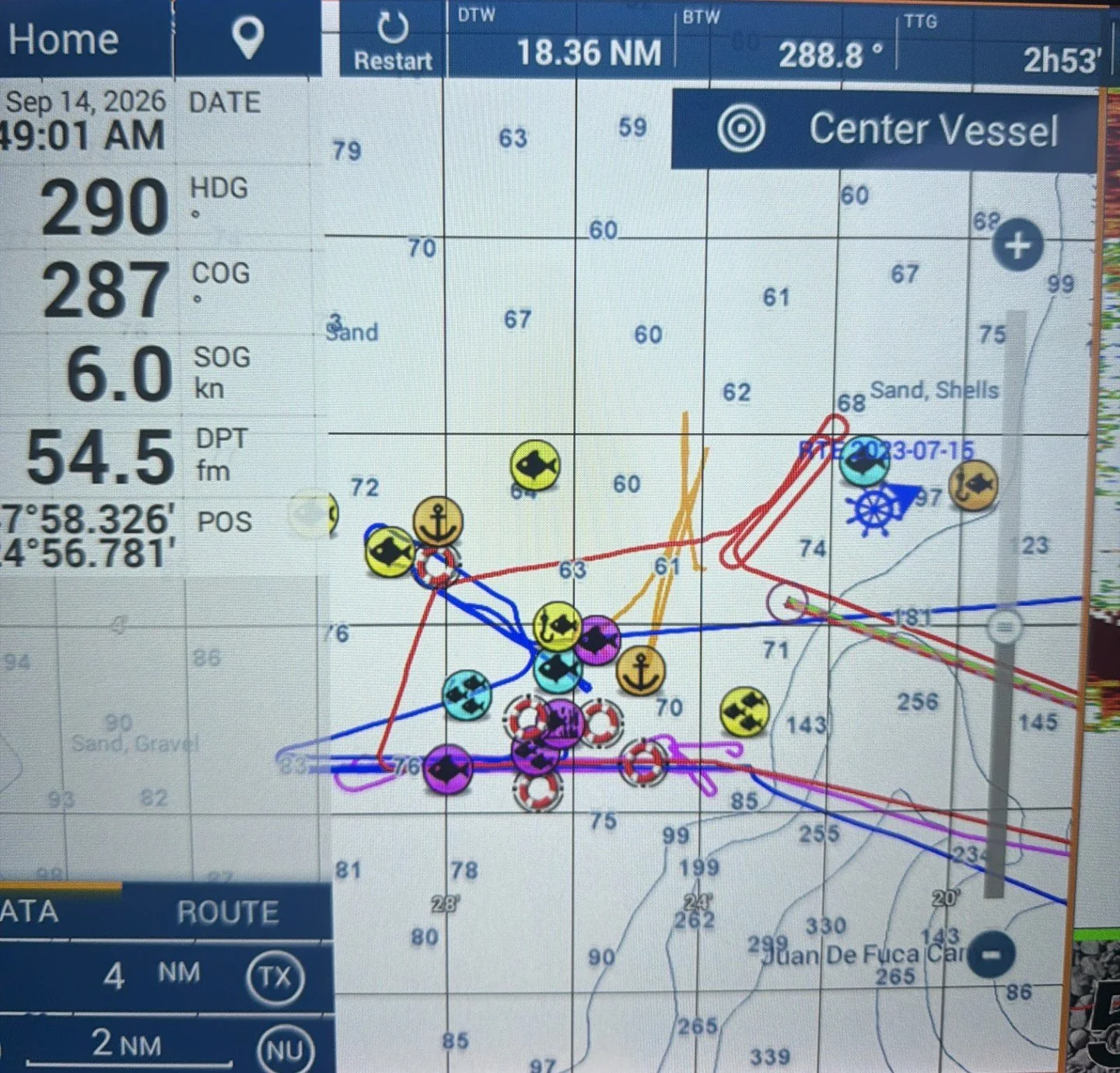
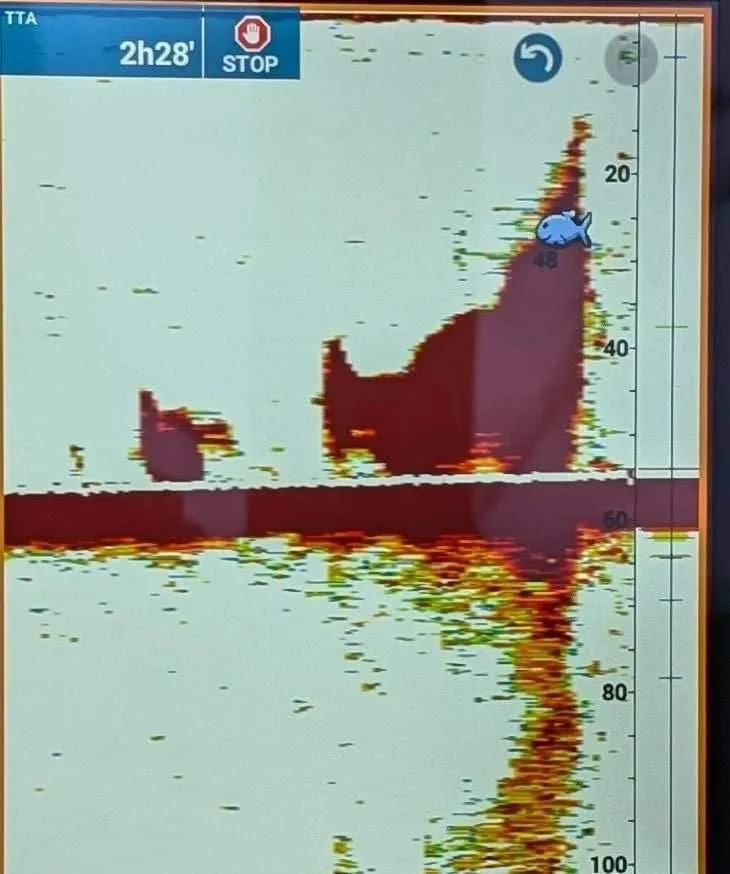
Reaching the Prairie doesn't mean we've found the King Salmon.
Before we put our gear in the water, we begin looking for clues. Some come from satellites hundreds of miles above us. Others come from instruments aboard the Sharon Mae. And some come from years of fishing these same waters.
No single piece of information tells us where the Kings will be.
We're looking for the place where the clues begin to come together.
IT’S TIME TO FISH
Setting the Gear
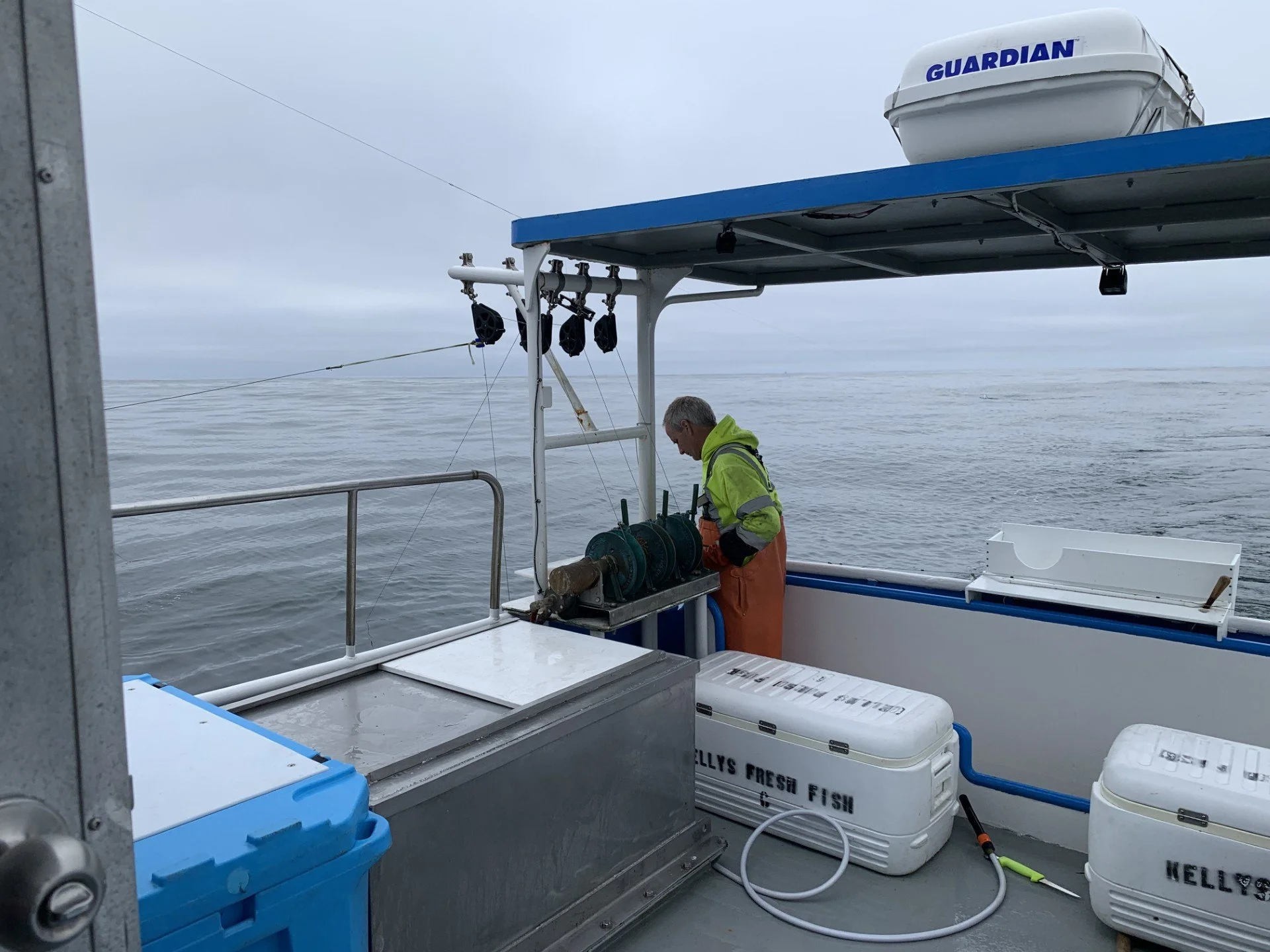
TK setting the gear on a flat ocean
We've read the ocean, studied the conditions and watched what's happening beneath the Sharon Mae.
Now it's time to fish.
As we wake from a short night’s sleep and we position the boat for its first tack of the day, Sharon brings the Sharon Mae down from our cruising speed of about 6½ knots to roughly our 3-knot troll speed, and we begin setting our gear.
We fish six trolling wires—three each on both the starboard and port sides of the boat. Each wire is controlled by a hydraulic gurdy and carries a heavy lead cannonball attached on the bottom of the wire that takes our gear 40-70 fathoms deep into the Pacific, depending on which wire.
Attached to the wire above the cannonballs every four fathoms, are individual lengths of monofilament we call spreads. Each spread is approximately three to five fathoms with a lure attached to the end.
But all six wires don't fish the same way.
Aboard the Sharon Mae each wire has a name, we call them the Bags, the Tips and the Jiggers.
The Bags are the first wires we set and usually our deepest. These two wires, one on each side, carry seven spreads each. Once they're down to the depth we want, we attach a float to the wire that carries the gear on that wire roughly 100 feet behind the Sharon Mae.
Next come the Tips, they also carry seven spreads and are rigged much like the Bags. They fish alongside the boat but are carried outward by our tag lines running from the tips of our tall trolling poles.
Finally come the Jiggers, our shallowest wires and carrying only four spreads each. They fish closer and in front of the boat with shorter spreads, usually only one and a half fathoms long—a setup that can make things especially challenging when a big King takes the lure.
With all six wires fishing, the Sharon Mae continues slowly across the Prairie at about 3 knots.
Now we wait.
And we listen for a bell.
THE BELL RINGS
We have a King on
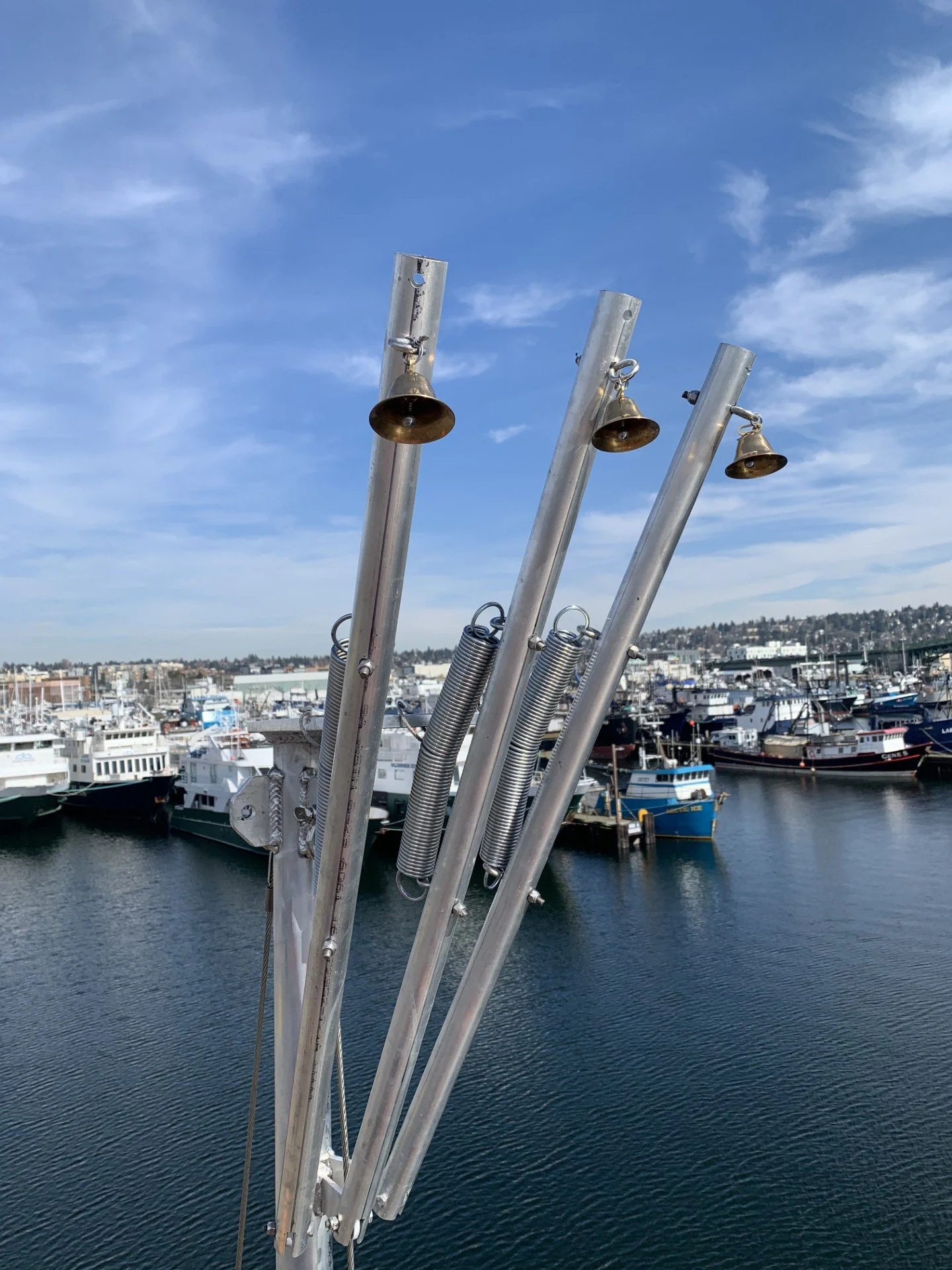
Our Trigger Sticks and Bells
The image above shows the assemblies at the ends of our trolling poles that we call “Trigger Sticks.”
When we're fishing, our trolling poles are lowered to about a 45° angle. A tag line connects each gurdy wire to its own Trigger Stick.
When a King Salmon strikes one of our lures deep beneath the Sharon Mae, the fish begins to fight. That movement travels up the wire to the Trigger Stick and rings the bell.
That's how we know we have a fish on—and which wire it's on.
We use the hydraulic gurdy to begin the long retrieval of that wire, bringing the spreads back aboard one at a time until we reach the one carrying the King.
Every King we land aboard the Sharon Mae is hand-fought the rest of the way to the boat. There are no rods and reels—only monofilament, the fish, and our hands.
WAIT. Shh…listen. Do you hear that bell? I think we have a fish on!
THE FIGHT
The moment we’ve been waiting for
TK fighting a nice King Salmon
We work the King toward the Sharon Mae, gaining line when the fish allows it and giving line when it doesn't. As the King gets closer to the boat, the fight often becomes more intense.
This is where experience matters.
OVER THE RAIL
The most crucial time of landing the fish
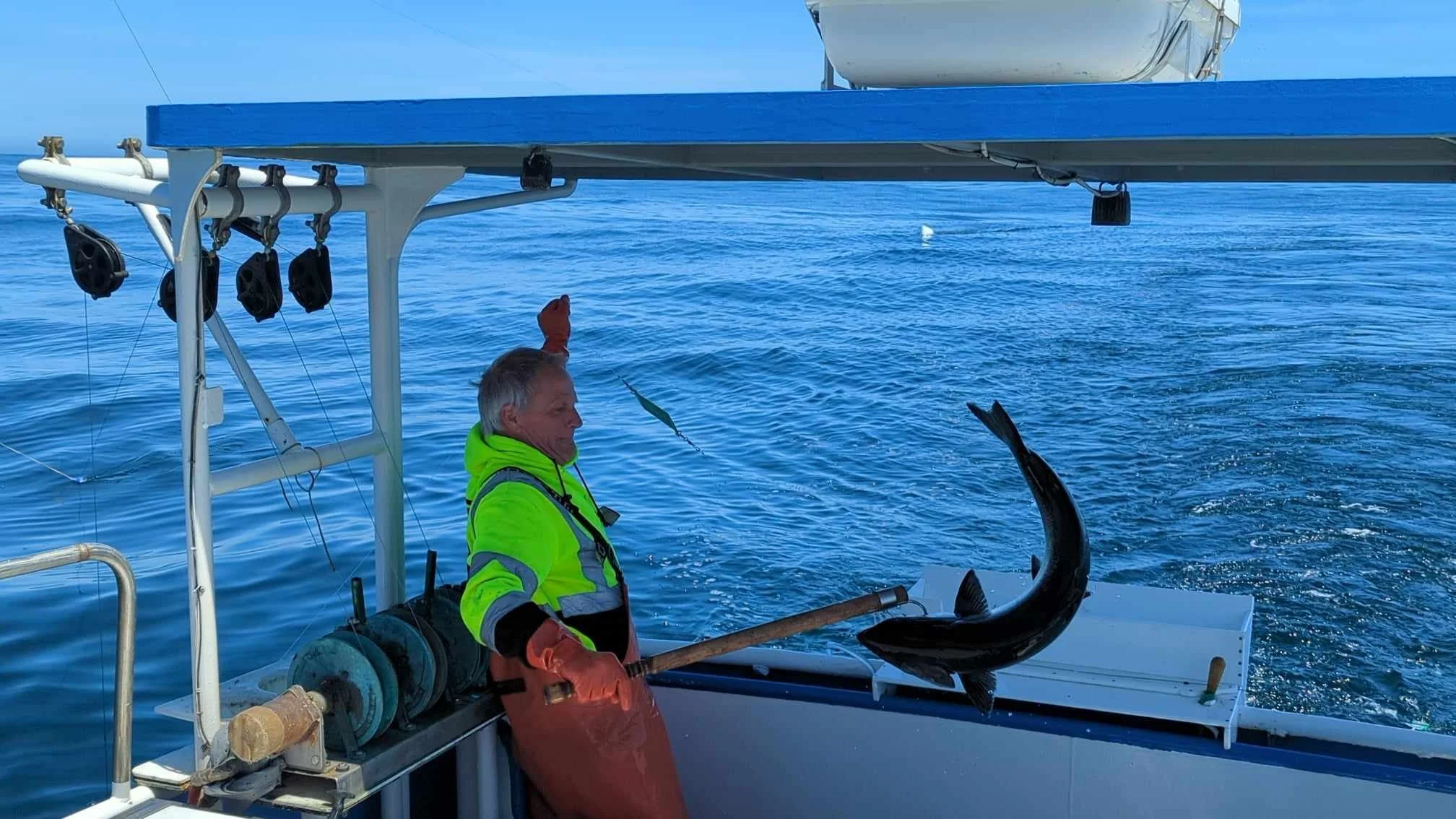
A large King Salmon comes over the rail of the Sharon Mae
Eventually, the King comes alongside the boat, and we get our first opportunity to land our fish.
Sometimes a King is still too “hot” on that first go-around. When that happens, we have a few tricks. Sometimes we'll do what we call “put the fish back down and let him soak a bit.” Other times we'll run the gurdy up and down several fathoms to get the fish a little “dizzy” and settle him down.
And then there are Kings that arrive alongside the Sharon Mae completely worn out—so tired we can sometimes reach down and literally lift them right out of the water by hand.
Every fish is different.
But on this occasion, at just the right moment, we reach down with the gaff and aim for the bullseye on the King, dead center on the gill plate, stick the gaff and bring the King over the rail.
We've caught our King.
But now the most important work begins.
THE FIRST MINUTE’S MATTER
Preserving our catch starts as soon as the fish comes aboard
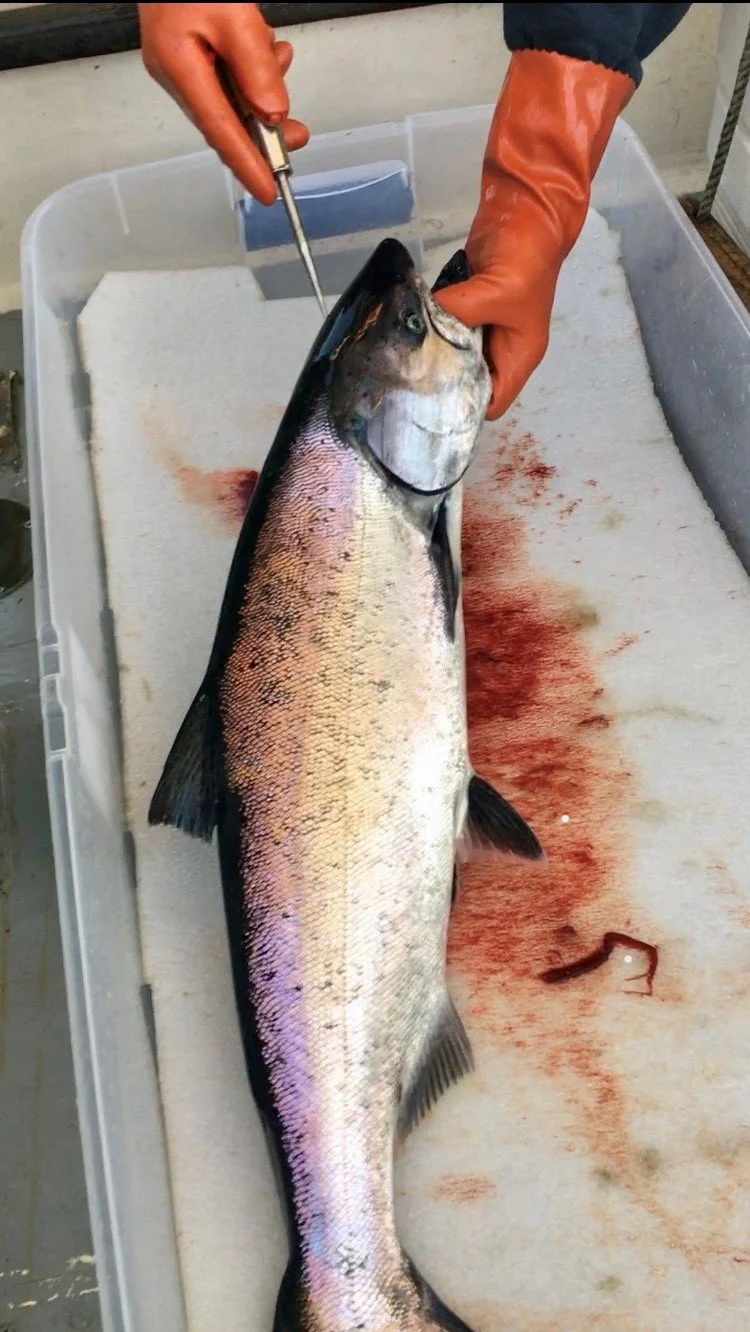
The Ikejime dispatch method is both humane and paramount to product preservation
Catching the fish is only half the work.
The moment a King comes over the rail, our job changes. From this point forward, everything we do aboard the Sharon Mae is focused on preserving the quality of the fish we've just caught.
And the first few minutes matter.
We immediately dispatch the King with a precise spike to the brain. This quickly stops the fish's muscular activity and ends the stress of the fight.
BLEEDING AND CHILLING
Driving the core temperature of the fish down while it bleeds out
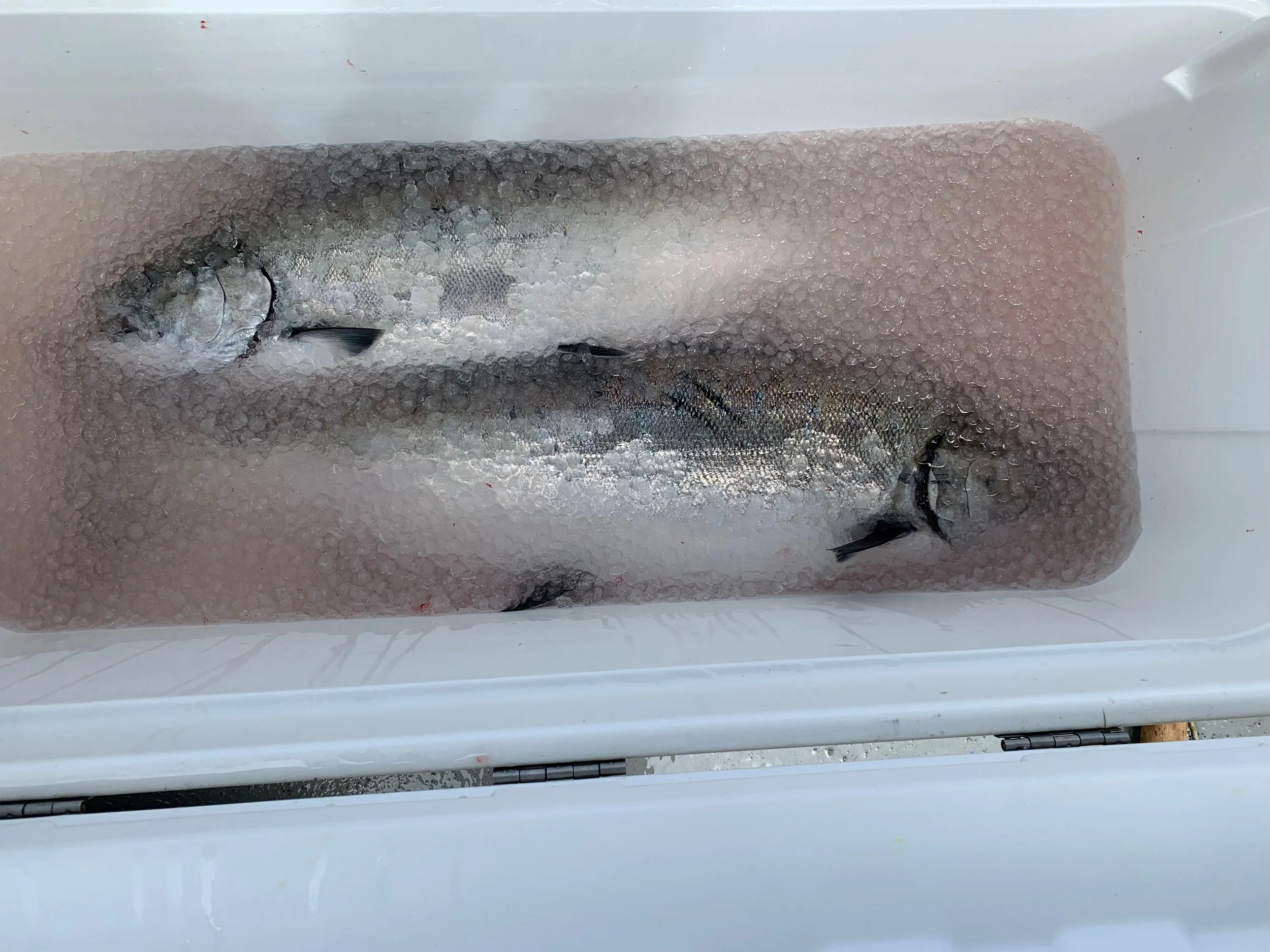
Two large King Salmon bleeding out while being chilled
We then cut a gill and place the King directly into our first ice slurry.
Here the fish is allowed to bleed naturally for approximately an hour while the ice slurry rapidly begins pulling heat from its body. Our goal is to drive the King's core temperature toward 0°C as quickly as possible.
Stress, time and temperature all begin affecting a fish from the moment it is caught. By dispatching the King immediately, bleeding it and rapidly chilling it, we're trying to slow those changes from the very beginning.
For us, PREMIUM GRADE doesn't begin back at the dock. It begins right here, on the deck of the Sharon Mae.
PRESSURE BLEEDING
Blood exsanguination technique is vital in our process
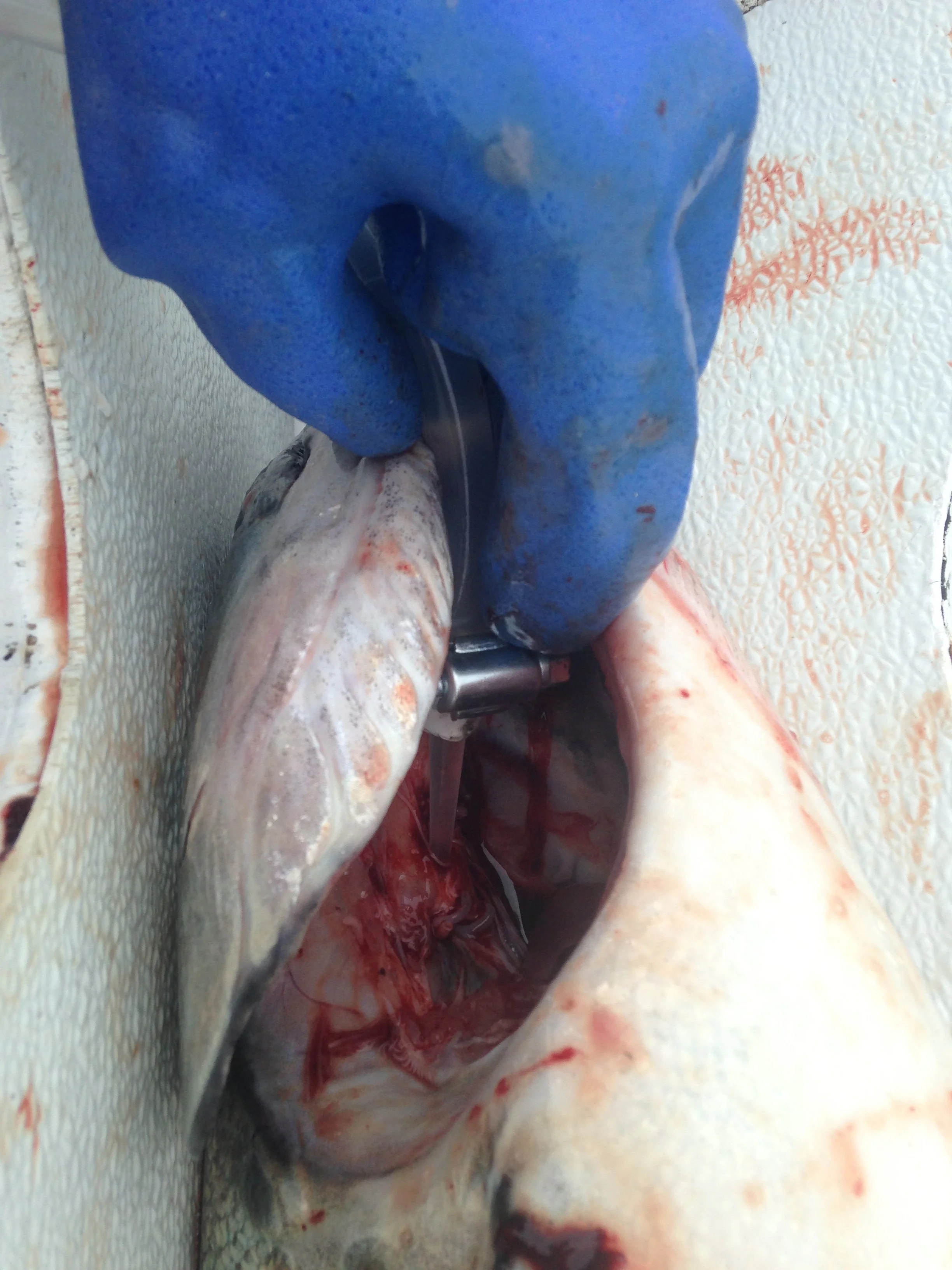
We use a very small lab tippet and surgical tubing with low pressure
After approximately an hour of bleeding and rapid chilling, we remove the King from the slurry and begin our cleaning process.
First we remove the gills, giving us access to the fish's vascular system. We then use our pressure-bleeding technique to remove blood remaining within the King before carefully eviscerating and cleaning the fish.
We work deliberately, but quickly. Every minute the King is out of the slurry is a minute we're no longer pulling its temperature down.
ICE, ICE, ICE
From the moment a King comes aboard, keeping it cold is paramount
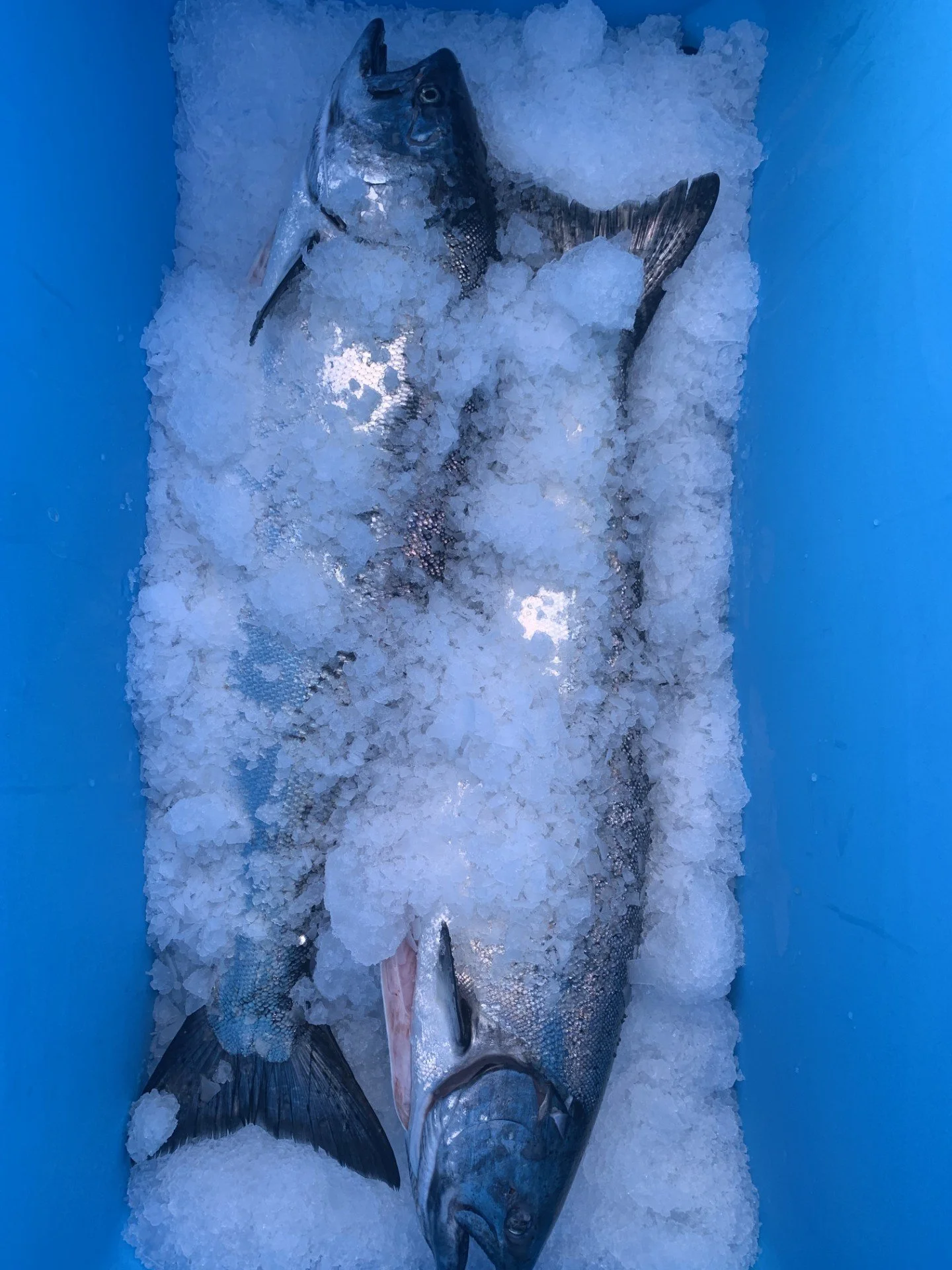
We use insulated seafood totes for fish storage onboard
Once cleaned, the King goes into a second, fresh ice slurry for several more hours before being transferred to our iced fish hold.
There it remains completely surrounded by ice until the Sharon Mae returns to La Push.
From the moment that bell rings until we reach the dock, each King has been caught, handled, bled, cleaned and chilled individually aboard our boat.
But even after all of that...
only a few will be chosen.
THE HARVEST
Not every King Salmon becomes part of the Sharon Mae Private Reserve
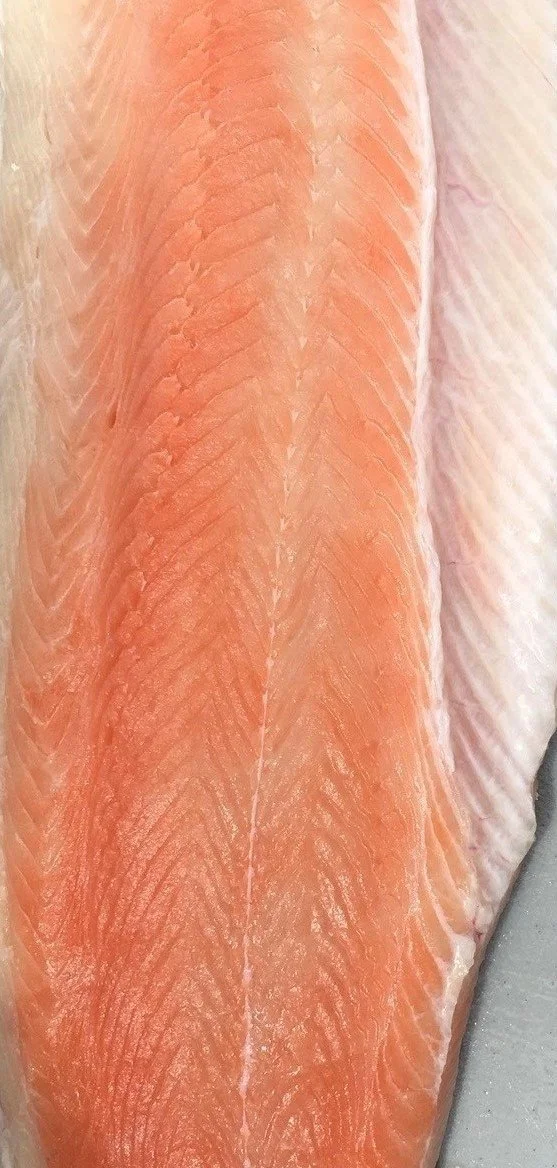
Marbled King Salmon
During the season, we set aside only a very small number of Kings that stand out for their exceptional richness and natural marbling. The creamy white fat you see running through this fish is exactly what we look for — a remarkable fat profile that gives these Kings their richness, texture and flavor.
From the moment that bell rings until we reach the dock, each King has been carefully hand-fought, landed, bled, cleaned and chilled individually aboard the Sharon Mae.
The fish chosen for our Private Reserve represent only a tiny fraction of our annual harvest.
They aren't selected because they're the largest. They're selected because they're the best.
FROM HARVEST TO TIN
The final journey to Ilwaco
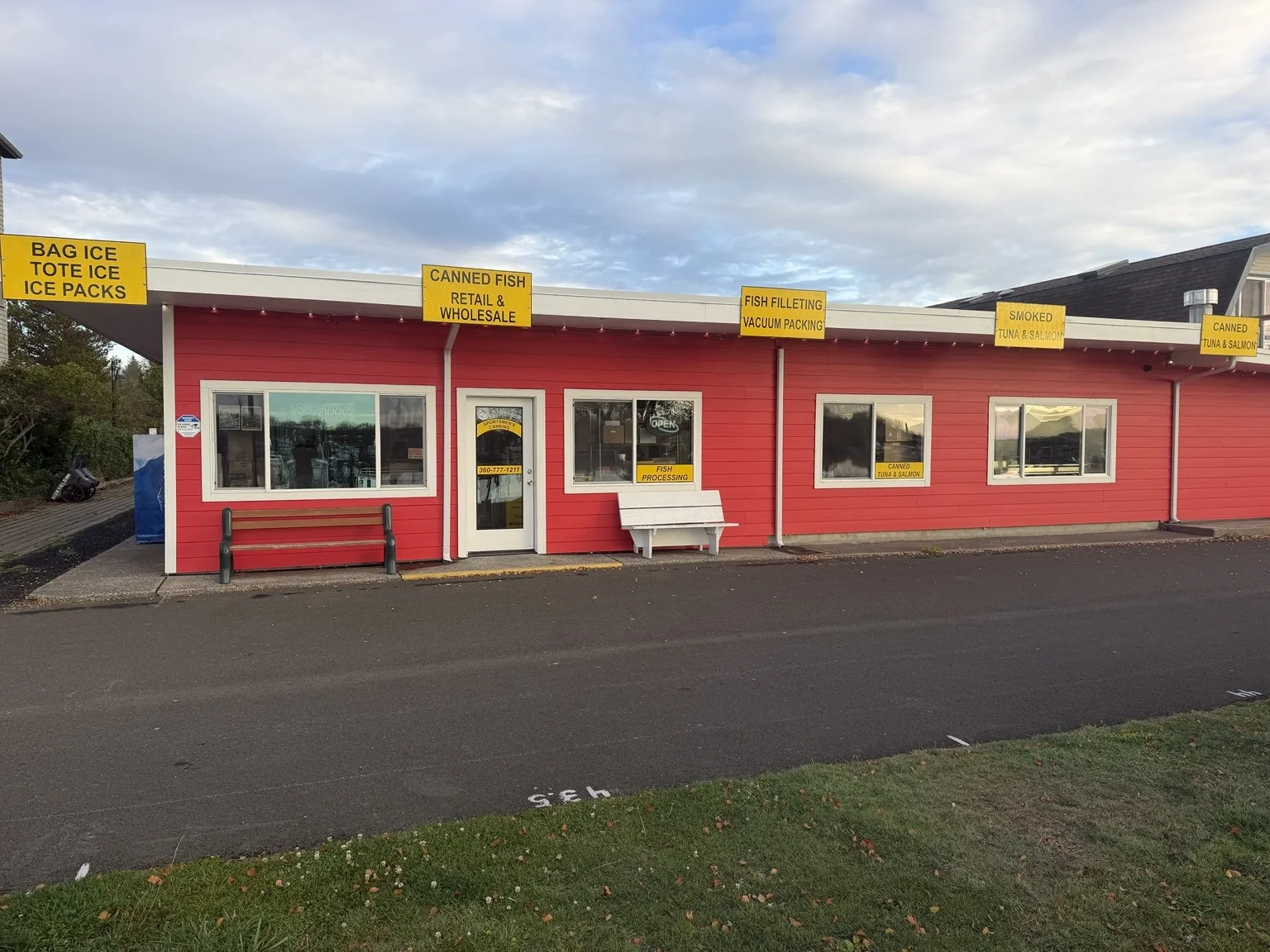
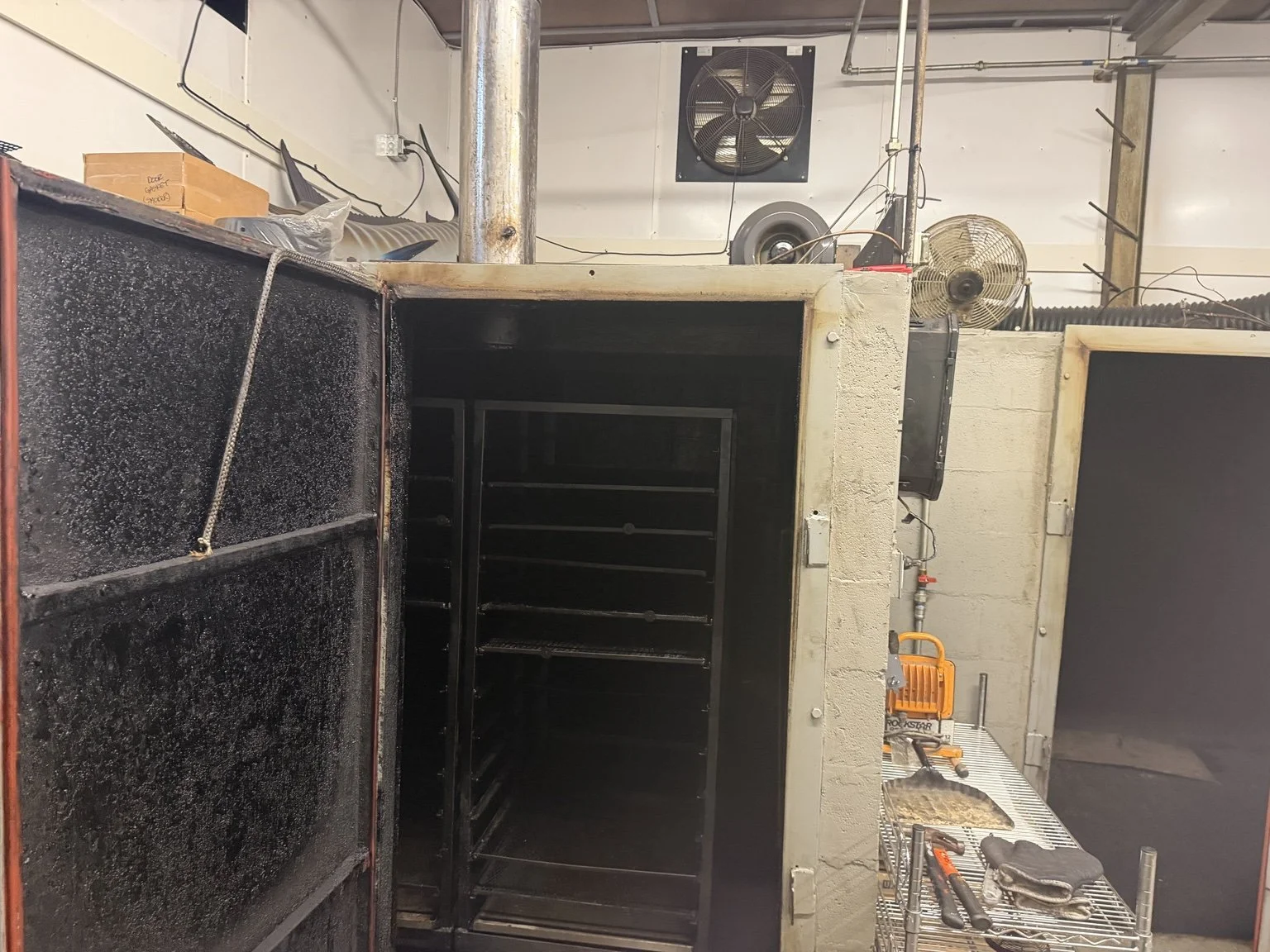
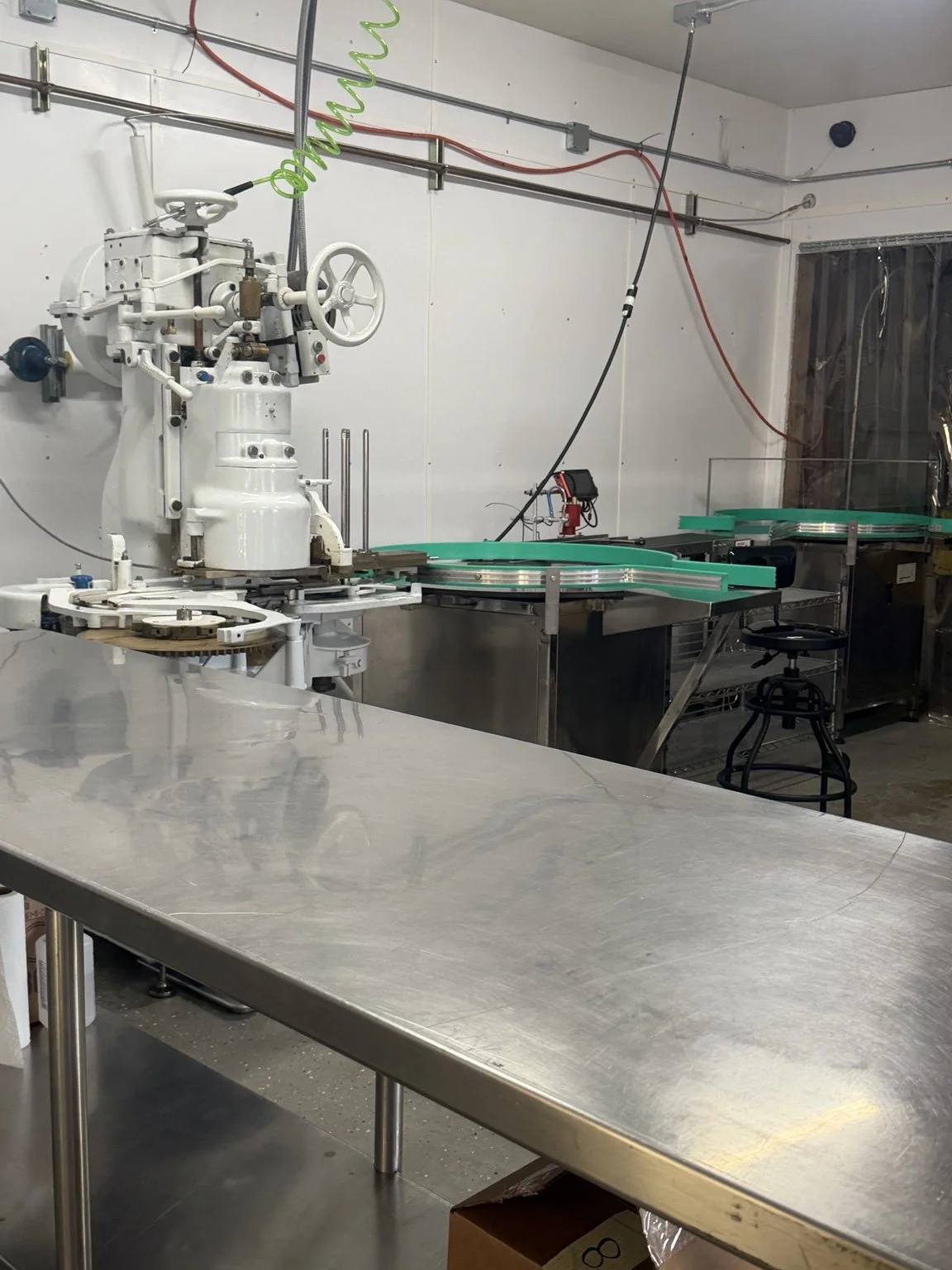
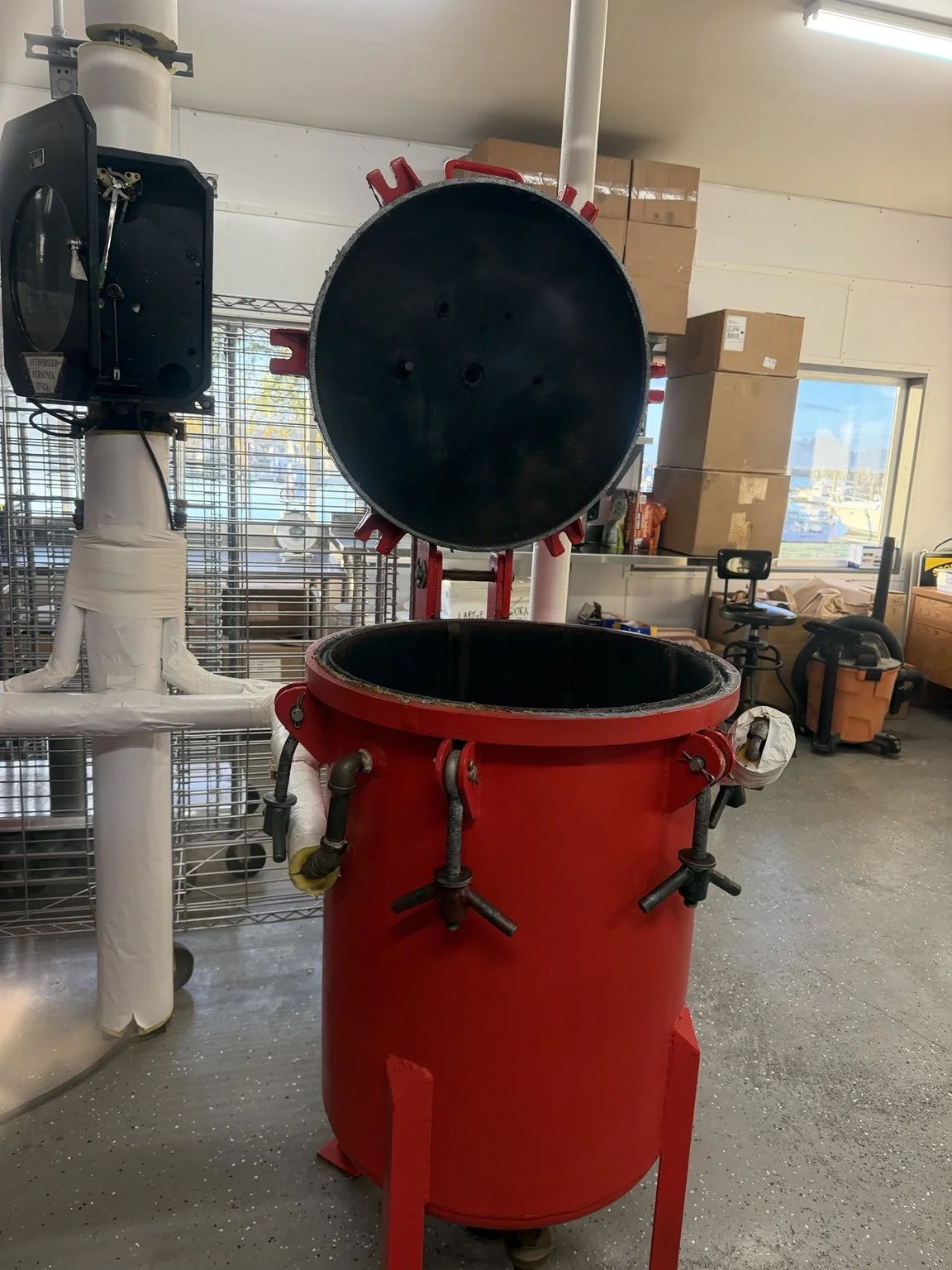
The Kings chosen for our Private Reserve have one final journey to make.
After returning to La Push aboard the Sharon Mae, these exceptional fish are set aside from the rest of our harvest and delivered to Sportsmen's Cannery in Ilwaco, Washington, near the mouth of the Columbia River.
Here, our Marbled King Salmon undergoes its final transformation.
Our goal from the beginning was to preserve the remarkable richness and natural flavor of these Kings, not cover it up.
The salmon is carefully prepared, lightly smoked with alder, and hand packed into individual tins.
Once packed, each tin is sealed and processed under carefully controlled heat and pressure to produce a shelf-stable product.
It's a remarkable change from the King that came over the rail of the Sharon Mae hundreds of miles away.
But the fish inside is the same exceptional Marbled King Salmon we selected from our season's harvest.
Caught one at a time. Handled one at a time. Selected for something special.